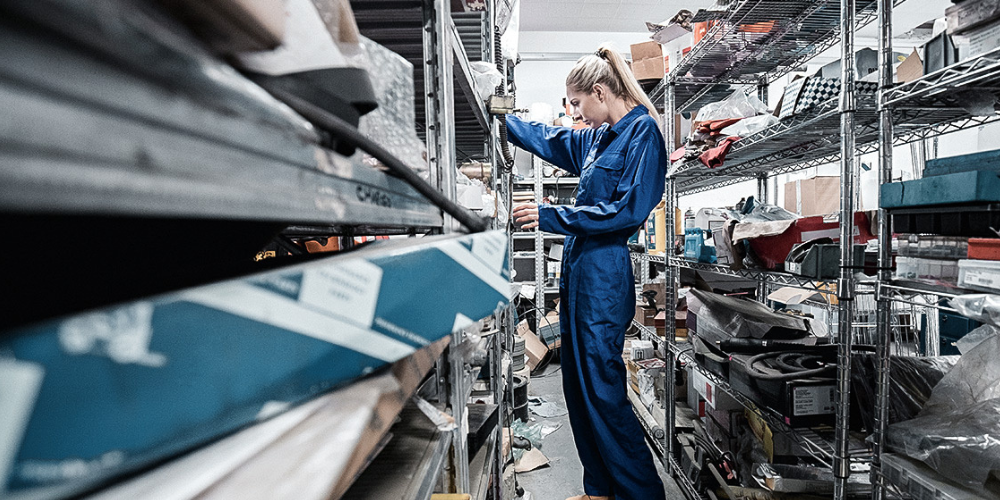
Making the most of available warehouse space is essential for businesses looking to increase storage capacity, improve productivity and control operating costs. As inventory grows, warehouses can quickly become overcrowded, making it harder to access goods and fulfil orders.
Moving into a larger facility is not the only option. Reviewing existing storage arrangements and making better use of vertical space can help businesses increase capacity within their current footprint.
1. Review your current warehouse layout
Before investing in additional storage equipment, assess how effectively your existing warehouse space is being used.
Poorly positioned stock, unnecessarily wide aisles and inefficient picking routes can all reduce usable storage capacity. A warehouse layout that has evolved over time may no longer suit current inventory levels, product ranges or order volumes.
Start by mapping your existing storage areas and identifying where space is being wasted.
Some things to consider could be:
- Are aisles wider than necessary for the equipment being used?
- Are fast-moving items positioned conveniently for picking?
- Is stock occupying valuable floor space that could be used more effectively?
- Are goods frequently moved because their storage locations are unsuitable?
- Are receiving, dispatch and packing areas creating bottlenecks?
Reviewing these factors can highlight opportunities to make better use of the available space.
2. Make better use of vertical space
One of the most effective ways to increase warehouse storage capacity is to make better use of the available building height, increasing capacity without requiring additional floor area.
High-bay racking allows pallets and other load units to be stored at considerable heights, making it suitable for operations handling large quantities of goods.
Vertical storage systems use the height of the building to store smaller items within a compact footprint.
Use Vertical Lift Modules
A Vertical Lift Module (VLM) is an enclosed, automated storage system containing trays arranged vertically. An extractor retrieves the required tray and delivers it to an access opening, bringing goods directly to the operator. This can reduce unnecessary walking and allow more inventory to be stored within a smaller footprint.
VLMs are particularly suitable for small or spare parts, tools, electronic components and other items that would otherwise occupy multiple shelving units or storage cabinets. They can also automatically measure stored items and position trays to make efficient use of available space, while integration with warehouse management software can help track stock locations and movements.
Consider Vertical Carousel Modules
Vertical carousel modules (VCMs) provide another option for increasing storage density, particularly when handling frequently accessed items of similar dimensions.
Unlike a VLM, which uses an extractor to retrieve individual trays, a vertical carousel rotates carriers to bring the required goods to the access opening.
Vertical carousels can be particularly useful where:
- Inventory needs to be retrieved frequently.
- Many items have similar dimensions.
- Floor space is limited.
- Operators need quick, convenient access to stored goods.
3. Optimise your racking system
The best racking configuration depends on the type of inventory being stored, how frequently it is accessed and how quickly goods need to move through the warehouse.
Conventional pallet racking provides direct access to individual pallet locations, making it suitable for warehouses handling a wide range of products. Where storage density is a priority, alternative configurations can accommodate more goods within the available floor area.
High-density racking systems, such as drive-in racking, push-back racking and pallet shuttle systems, allow goods to be stored more closely together, reducing the space required for access aisles.
Drive-in racking: Allows handling equipment to enter storage lanes, reducing the need for individual access aisles.
Push-back racking: Stores pallets on inclined rails, allowing additional pallets to be positioned behind the front pallet.
Pallet shuttle systems: Use a powered shuttle to move pallets within storage lanes, reducing the need for forklifts to enter the racking structure.
The most suitable option depends on your stock rotation requirements, product variety and picking processes.
4. Organise inventory according to demand
The way inventory is organised can influence warehouse space utilisation and productivity.
Items that are rarely used may occupy convenient storage locations, while fast-moving products are positioned further away from picking and dispatch areas. This can create unnecessary movement and make everyday operations less efficient.
Start by analysing inventory turnover and picking frequency. Group products according to how often they are accessed, their dimensions and any specific storage requirements. Frequently picked items may benefit from locations closer to packing stations, while slower-moving inventory can be stored elsewhere, provided it remains safe and practical to retrieve.
It's also worth identifying obsolete, damaged and excess stock. Products that are no longer needed can occupy valuable locations that could be used for active inventory. Reviewing stock levels regularly can help businesses identify surplus goods and avoid ordering items they already have in sufficient quantities.
Warehouse Analytics can help businesses understand where goods are stored, how frequently they move and where changes to storage arrangements could improve capacity.
5. Reduce the space used by manual picking and handling
The equipment and processes used to retrieve and move inventory can affect how much space is available for storage.
Traditional picking methods often require employees to travel between shelves and racks, while forklifts and other handling equipment need sufficient room to manoeuvre. These requirements can limit storage capacity, particularly where aisles and access routes take up a significant proportion of the floor area.
Goods-to-person automation offers an alternative. Automated storage and retrieval systems bring the required items to an operator at a fixed picking station, reducing the need to travel between storage locations.
Depending on the system and warehouse layout, this approach can help consolidate inventory into a smaller footprint and improve picking efficiency.
6. Plan for future storage requirements
As inventory levels, product ranges and order volumes change, storage arrangements need to keep pace.
Before investing in new equipment or expanding your warehouse, consider expected demand, seasonal fluctuations and new product lines. Increasing storage density may help you make better use of your existing facility, delay relocation and free up room for other activities.
Regularly reviewing storage utilisation, inventory turnover and order volumes can help identify when changes are needed and ensure your warehouse continues to meet the needs of the business.
Ready to maximise your warehouse space?
Making better use of your warehouse space doesn't always mean expanding your facility. Reviewing inventory, improving your layout and choosing the right storage systems can help you increase capacity and make everyday operations more efficient.
If you're looking to make better use of your available space, Kardex offers a range of storage and automation solutions to suit different warehouse requirements. Contact us here to discuss your options or request a quote.