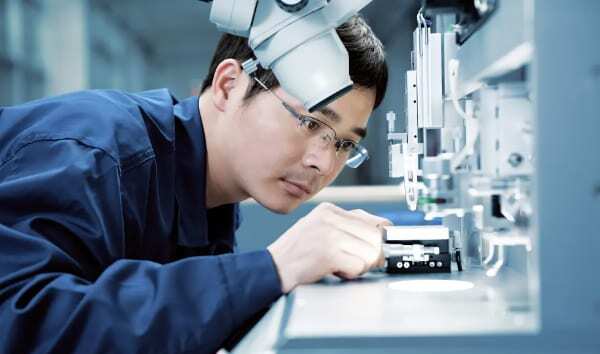
Managing electronic components is rarely straightforward. Your operation likely handles thousands of small, high-value parts with strict traceability requirements, short product life cycles, and frequent engineering changes. Floor space is limited, picking errors are costly, and manual storage makes it difficult to keep pace with production and service demands.
Why electronics operations feel constant pressure
Across Europe, electronics manufacturers and service organisations face a combination of rising labour costs, tighter quality standards, and increasing SKU complexity. Components such as PCBs, connectors, sensors, and cables must be stored securely, protected from damage, and retrieved quickly. Traditional shelving struggles to support these requirements without consuming valuable space or increasing handling risk.
This is where automated storage systems, particularly vertical lift modules (VLMs), are becoming a practical part of electronics logistics strategies.
What a VLM changes in an electronics environment
A vertical lift module is an enclosed, automated storage and retrieval system that uses the full height of your building. Trays are stored vertically and delivered automatically to the operator using the goods-to-person principle. Instead of walking aisles or searching bins, your team accesses the required components at a controlled access point.
For electronics operations, this approach directly addresses common operational pain points.
Higher storage density without compromising access
Electronic components are typically small, varied in size, and sensitive to handling. VLMs allow you to store these items in a compact footprint while maintaining organised, clearly defined storage locations. By using vertical space rather than expanding floor-level shelving, many electronics operations significantly reduce the area required for parts storage.
High-density storage also makes it easier to position components closer to production lines or service areas, reducing internal transport time and congestion.
Improved picking accuracy for high-SKU environments
Picking accuracy is critical in electronics. A single incorrect component can stop an assembly line or delay a customer order. VLMs support accuracy through controlled access, clear item presentation, and software-guided picking processes.
Only the required tray is presented, and operators are guided to the correct item location. This structured approach reduces miss-picks and supports consistent order fulfilment, even when SKU counts are high and product ranges change frequently.
Better protection for sensitive components
Many electronic parts are vulnerable to dust, light, electrostatic discharge (ESD), or accidental damage. Because VLMs are enclosed systems, they provide a more controlled storage environment than open shelving. Components remain protected until the moment they are retrieved, reducing handling and exposure.
This is particularly relevant for spare parts, service components, and high-value items where damage or contamination leads directly to cost and rework.
Faster access with fewer manual movements
In electronics warehouses, time is often lost walking between storage locations or searching for small items. VLMs eliminate these non-value-adding activities by bringing the required tray directly to the operator at an ergonomic working height.
This improves throughput while also reducing physical strain on your team. Over time, fewer manual movements contribute to safer working conditions and more predictable performance.
Inventory visibility and traceability
Electronics operations often require detailed inventory control, including batch tracking and serial number management. VLMs integrate with warehouse management and ERP systems, supporting real-time inventory visibility.
Because storage locations are system-controlled, stock accuracy improves and discrepancies are easier to identify. This supports audit readiness and helps prevent shortages or overstocking of critical components.
Where VLMs fit best in electronics operations
Vertical lift modules are commonly used to store:
- Small electronic components and assemblies
- Spare parts for maintenance and after-sales service
- Tools and test equipment
- Kitted components for production orders
They are used both in manufacturing environments and in service or distribution operations where space efficiency and accuracy matter.
A practical next step
If your electronics operation is under pressure to store more components, improve picking accuracy, or reduce floor space usage, a vertical lift module is worth considering as part of your broader warehouse automation strategy.
Exploring how automated storage fits into your existing workflows can help you identify where the biggest operational gains are likely to come from.