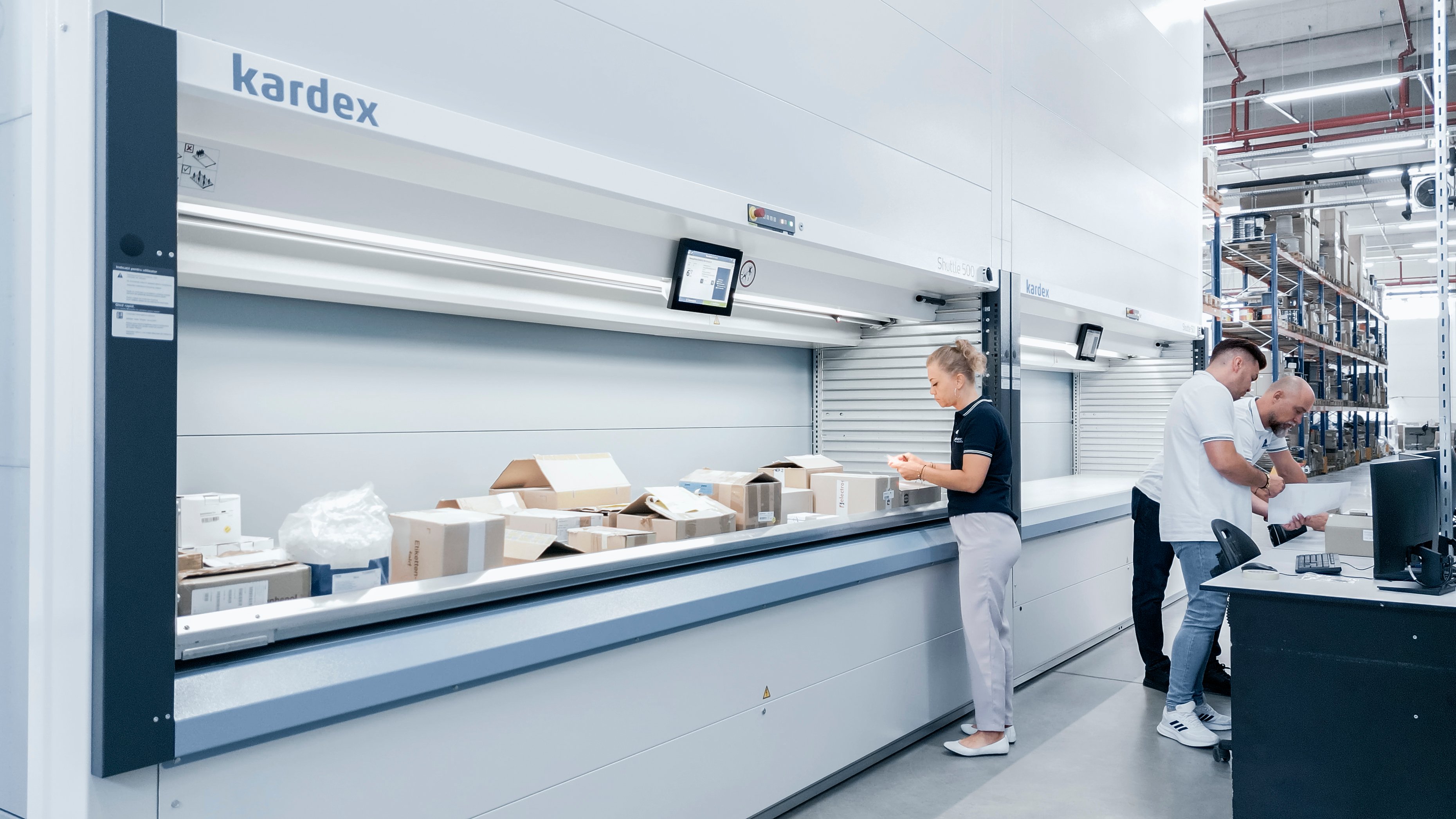
In today's fast-paced supply chain environment, businesses are under constant pressure to deliver products faster, reduce operational costs, and maintain high levels of accuracy. Traditional warehousing methods, which rely heavily on manual labour and paper-based processes, often struggle to keep up with growing customer expectations. This is where automated warehousing comes in.
Automated warehousing uses advanced technologies, robotics, and software systems to streamline warehouse operations with minimal human intervention. By automating repetitive and time-consuming tasks, businesses can improve efficiency, increase productivity, and create a more agile supply chain.
Understanding automated warehousing
An automated warehouse integrates intelligent machines, software, and data-driven processes to handle activities such as receiving, storing, picking, packing, inventory management, and shipping. Rather than depending entirely on manual workflows, automated systems coordinate these operations with speed and precision.
Automation can range from simple technologies like barcode scanners and conveyor belts to highly sophisticated systems that use artificial intelligence (AI), robotics, and autonomous mobile robots (AMRs).
The goal is not necessarily to replace warehouse workers but to enable them to focus on higher-value tasks while machines handle repetitive, physically demanding, or error-prone activities.
How automated warehousing works
Automated warehousing combines hardware and software to create a seamless flow of goods throughout the warehouse. Typical processes include:
- Goods are received and automatically identified using barcode or RFID scanning
- Inventory is assigned optimal storage locations by a Warehouse Management System (WMS)
- Automated Storage and Retrieval Systems (ASRS) or robotic systems transport products to designated locations
- Customer orders are processed automatically, with robots or automated pickers retrieving items
- Conveyor systems move products to packing stations
- Orders are packed, labelled, and prepared for shipping with minimal manual handling
- Inventory levels are updated in real time, ensuring accurate stock visibility
This integrated approach significantly improves warehouse performance while reducing delays and operational errors.
What are the benefits of automated warehousing?
Improved efficiency
Automation accelerates warehouse operations by reducing the time required for storing, picking, and shipping products.
Greater accuracy
Automated systems minimise human errors during inventory tracking and order fulfilment, leading to fewer incorrect shipments and returns.
Lower operating costs
Although automation requires an initial investment, businesses often achieve significant long-term savings through reduced labour costs, improved productivity, and fewer operational errors.
Enhanced inventory visibility
Real-time inventory tracking enables businesses to maintain accurate stock levels, reducing overstocking and stockouts.
Better workplace safety
Robots and automated equipment perform heavy lifting and repetitive tasks, reducing workplace injuries and improving employee safety.
Scalability
Automated warehouses can adapt more easily to seasonal demand fluctuations and business growth without requiring proportional increases in workforce size.
Industries that benefit from automated warehousing
Many industries are adopting warehouse automation to improve supply chain efficiency, including:
- E-commerce
- Retail
- Manufacturing
- Food and beverage
- Pharmaceuticals
- Automotive
- Electronics
- Third-party logistics (3PL)
Organisations with high order volumes or complex inventory management often experience the greatest benefits from automation.
When it comes to warehousing, the future is automated
Automated warehousing is transforming how businesses manage inventory, fulfil orders, and optimise supply chain operations. By combining robotics, intelligent software, and data-driven technologies, companies can increase efficiency, improve accuracy, reduce costs, and better meet growing customer demands.
While implementation requires careful planning and investment, the long-term benefits often outweigh any initial challenges. As automation technologies continue to advance, automated warehousing is set to become a cornerstone of modern logistics and supply chain management, helping businesses remain competitive in an increasingly digital economy.