
Warehouse and distribution center operations rarely have just one type of order to fulfill. You may ship full cases or pallets to stores and wholesale customers while also picking individual items for ecommerce, service parts, or other orders.
The right case picking system depends on what you're picking, how orders leave your facility, and which parts of the process you want to automate.
Let's look at the difference between full-case and split-case picking, the technologies available to support each, and what to consider when your operation needs both.
What is split-case picking?
Split-case picking is picking individual items (also known as broken case picking, piece picking, and/or each picking) and putting them directly into shipping containers to send to customers. The term literally refers to “splitting the case open”, and when you open that case, your order fulfillment strategy needs to adjust. This is very different than picking full cases or pallets and sending them to brick and mortar retail operations. Split-case picking is more complex and can be extremely labor intensive. However, there are technologies and specific strategies to support the picking process to ensure speed, accuracy and efficiency. Split-case distribution is especially common in ecommerce, retail, spare parts, industrial distribution, healthcare, and other operations fulfilling orders with smaller quantities across many SKUs.
What is full-case picking?
Full-case picking, or simply “case picking”, involves selecting an entire case (or box) of one SKU rather than picking the individual items inside it.
This is common in operations fulfilling larger quantities of the same product, including wholesale distribution, B2B orders, and retail store replenishment. Full-case picking is less common for typical direct-to-consumer e-commerce orders, where a customer might order one or two shirts rather than a full case of 40. However, the appropriate picking method ultimately depends on the product and order profile.
Full cases may be picked directly from the pallet, pallet rack or carton flow, picked to an outbound pallet, placed onto a conveyor, or retrieved using an automated system. The best approach depends on factors such as case size and weight, order volume, SKU count, and what needs to happen to the case after it is picked.
Full-case vs split-case picking
Simply put, full case picking means the operator is retrieving an entire case (or carton) of inventory from the shelf to be shipped. Split case picking means case of inventory remains on the shelf, and the operator is selecting individual units from the case. This seemingly small difference really isn't very small because it affects all the processes surrounding it.
| Aspect | Full-Case Picking | Split-Case Picking |
|---|---|---|
| Pick unit | Complete case | Individual item |
| Typical orders | Larger quantities per SKU | Smaller quantities across more SKUs |
| Common uses | Wholesale, B2B, store replenishment | Ecommerce, parts, DTC |
| Common automation needs | Case storage, retrieval, transport, sortation and palletizing | Storage, retrieval, item picking and order consolidation |
As ecommerce continues to represent a significant share of retail sales, operations may need to add split-case picking capabilities to support ecommerce order profiles.
Why should you diversify your warehouse with split-case picking?
E-commerce growth has normalized from the rapid increases seen before and during the pandemic, but online sales are now a much larger part of the retail landscape. In the U.S., ecommerce accounted for 19% of retail sales in 2025, compared with 12.2% in 2019, according to Capital One Shopping.
For many fulfillment operations, that means supporting a broader mix of channels, from full-case store replenishment and B2B orders to individual ecommerce orders.
That mix can create very different picking requirements within the same facility. An operation designed primarily for full-case picking may need to accommodate more each-level orders as its customer and channel mix evolves.
Building split-case picking capabilities into your operation before the existing process becomes a constraint can give you more flexibility to respond to those changes. This doesn't necessarily mean replacing full-case picking. It may mean adding the right processes or automation to efficiently support both.
How can your warehouse accommodate full-case and split-case picking?
Full-case and split-case picking create different requirements for how inventory is stored, located, retrieved and consolidated. The picking method that works for full cases may not be the best approach when an operator needs one or two items from many different SKUs.
Operations can accommodate full-case and split-case picking in several ways. Conventional shelving, flow rack and pick modules may be appropriate for some applications. As SKU counts, order volumes or space constraints increase, automated storage and goods-to-person technologies can reduce travel and bring the required inventory directly to the picker.
Invest in Technology
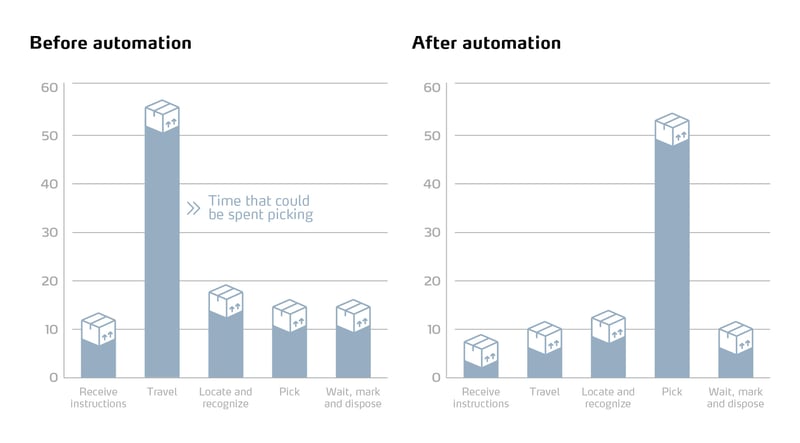
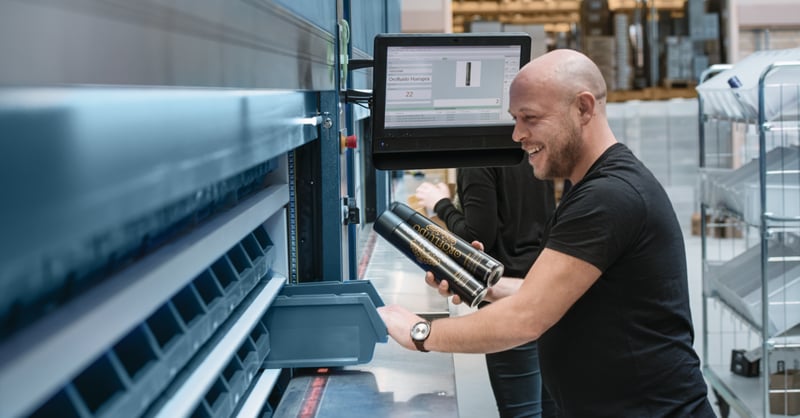
There are several different types of automated storage and retrieval systems (ASRS) available, offering varying rates of throughput, storage density, and full- and split-case picking capabilities. Many ASRS operate on the goods-to-person principle, bringing stored inventory directly to an operator at an ergonomic picking station. This can reduce the travel and search time associated with picking, particularly when managing a large number of SKUs.
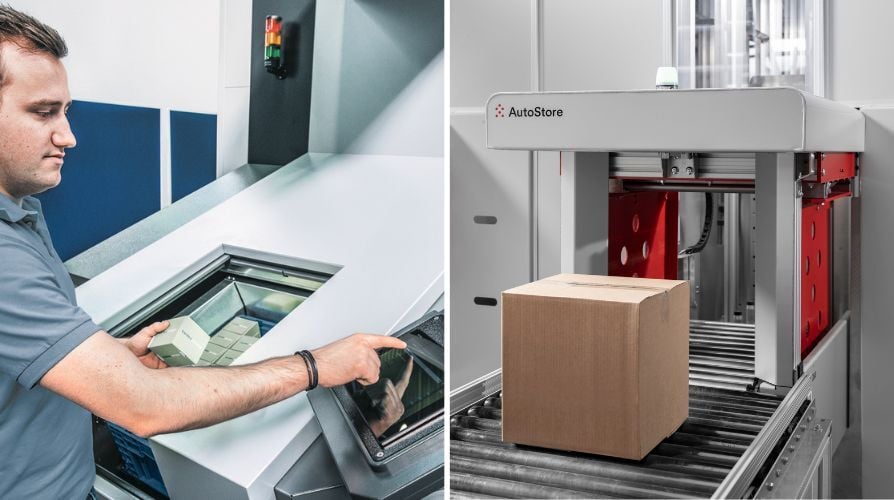
Split-case picking systems include Vertical Lift Modules (VLMs), Vertical Buffer Modules (VBMs), carousel systems and AutoStore can bring stored inventory directly to the picker, reducing travel and search time.
Full-case picking systems may include case shuttle or mini-load systems, AutoStore AutoCase, AMRs, and robotic case handling or palletizing. Case shuttle systems, for example, can automatically store and retrieve cartons or cases and integrate with conveyor for downstream movement.
To learn about the different types of ASRS, check out this check out this blog post. 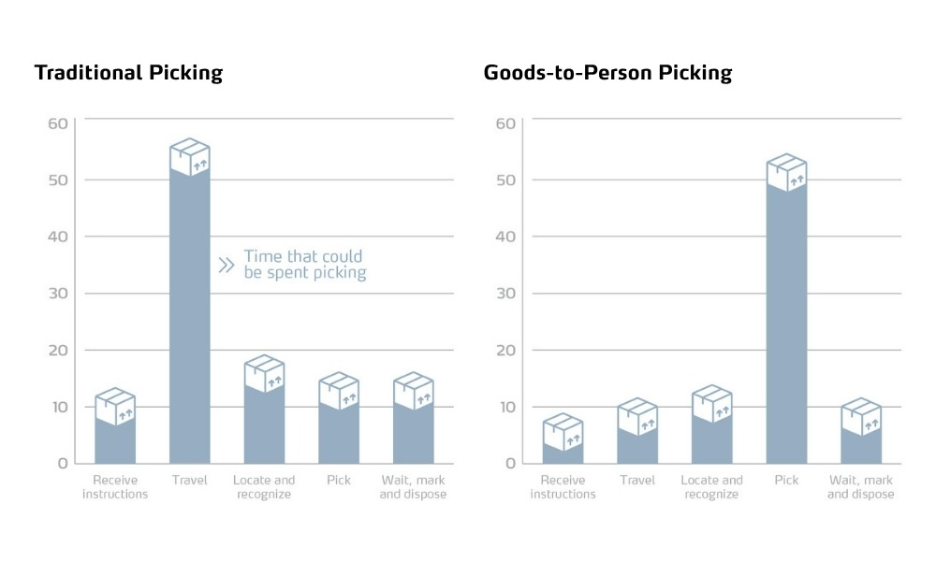 Choose the Right Picking Strategy
Whether you are picking full cases/pallets or individual items, a picking strategy is essential for your business. Here are some order picking strategies to consider:
- Zone or Parallel picking: Can be used for both. In full-case operations, operators may pick cases within assigned warehouse zones. In split-case operations, zones can help organize large SKU assortments and reduce operator travel.
- Batch picking: Multiple orders are grouped together so a picker can fulfill them during the same picking run, reducing repeated travel to the same storage locations. Depending on the process, items may be picked into individual order containers or sorted into their respective orders after picking.
- Wave release: Orders can be grouped and released for both full- and split-case fulfillment according to factors such as carrier cutoff, route, priority or shipping schedule. Wave release can be combined with other picking approaches, including zone or batch picking.
- Pick-and-pass: Particularly applicable when an order requires items from multiple zones. An order container moves between zones while operators add the required products.
For a deeper dive: Order Picking Strategies to Maximize Throughput and Accuracy
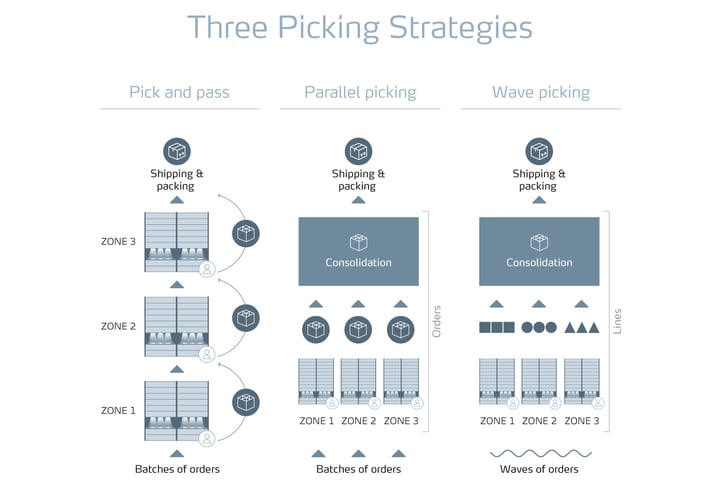
If you are handling the bulkier items (full cases and pallets), you might already have a strategy in place. One picking strategy does not fit all, therefore it’s important to evaluate the changes you’ve made to your operation to manage split-case picking. You likely need to consider batch picking multiple orders at once to increase throughput and speed picking. There are different techniques you can incorporate into your existing processes to include picking individual items without slowing down your operation.
Support multiple fulfillment channels with full and split-case picking
A single distribution center may support multiple sales and fulfillment channels, each with different order profiles. Store replenishment and B2B customers may require full cases, while ecommerce and direct-to-consumer orders may require individual items. Rather than designing these workflows in isolation, different technologies can work together to support full-case and split-case fulfillment within the same operation.
Automated storage and retrieval systems can be combined with technologies such as conveyor, sortation, autonomous mobile robots and robotics to connect picking with consolidation, staging and shipping. They can also take on different roles depending on the application. At Hella Distribution, for example, a Kardex Miniload-in-a-Box works with conveyor technology as an automated consolidation buffer. Prepared cartons are automatically transported into storage and held until the appropriate truck arrives, then retrieved the cases in the required sequence for palletizing. The solution reduced the warehouse footprint required for this process by 80%.
Technologies like AutoStore provide additional ways to integrate full-case and split-case workflows. AutoStore AutoCase can support case and each handling within the single AutoStore Grid. In addition to each-level picking, cases can be inducted for storage, retrieved for replenishment or outbound orders, buffered and sequenced within the Grid until they're needed downstream.
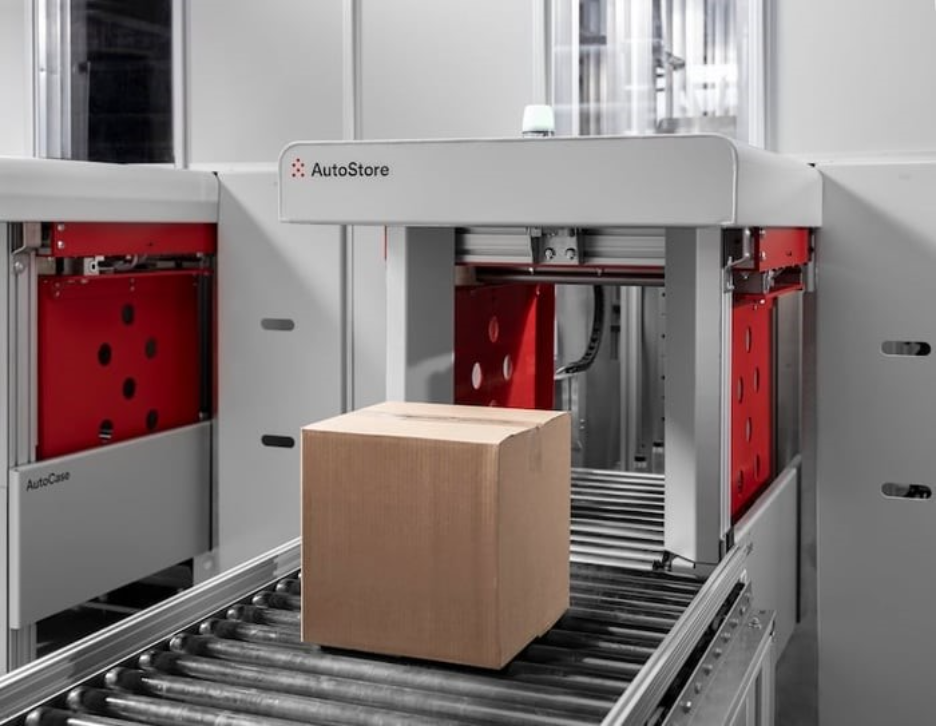
Ultimately, supporting multiple fulfillment channels doesn't require every order to follow the same path. The goal is to connect the right storage, picking, movement, buffering and software technologies so different order profiles can move efficiently through the same distribution operation.
Adding split-case picking capabilities can help diversify your operations and give you more flexibility to support e-commerce alongside existing B2B, wholesale and store replenishment channels. By building an operation capable of efficiently handling both full-case and split-case orders, you can be better prepared as your channel mix and customer requirements evolve.