
AutoStore systems are often evaluated based on grid size, robot count, and storage density. But one of the most important design decisions happens at the edge of the system where people, robots, and workflows intersect: the Port.
The type of AutoStore Port (now increasingly referred to as a "workstation") has a direct impact on throughput, robot utilization, labor efficiency, and long-term scalability. Two systems with the same grid and the same number of robots can perform very differently depending on how their workstations are configured. Kardex will determine the right Port selection and configuration based on your operational workflows.
AutoStore offers a range of Port types designed to support different picking workflows. If you're new to the system, it might help to understand the basics (like What is AutoStore?) before diving into the Port options.
What is an AutoStore Port?
An AutoStore Port, or workstation, is where inventory bins are accessed once they are retrieved from the grid by AutoStore robots. Depending on the workstation type, this interaction may involve:
- Manual picking or replenishment
- Automated or robotic picking
- Bin transfer to conveyors or other automation
- Order staging, consolidation, or customer pickup
While the AutoStore grid and robots handle storage and retrieval, workstations determine how efficiently orders are processed by the operator, whether human or robotic.
For a deeper dive on AutoStore, read: How AutoStore Works - Everything You Need to Know
Why Port Selection Matters
AutoStore Ports are often treated as interchangeable hardware, but in reality, Port selection directly impacts throughput, robot utilization, labor efficiency, and capital cost.
Two AutoStore systems with the same grid, robots, and software can perform very differently depending on how the Ports are configured.
Choosing the wrong Port for a given process can:
- Drive up robot counts unnecessarily
- Reduce achievable throughput
- Increase labor requirements
- Inflate capital spend without improving performance
This article is intended to give you a practical framework for understanding the most common AutoStore Port types and how we actually design them for real environments.
Coupled vs Decoupled Ports
One of the most important design differences between the AutoStore workstations is whether they are coupled or decoupled from robot activity.
This is not a “good vs. bad” distinction. It’s a design tradeoff.
-
Coupled: In a coupled design, robot drop-off and operator interaction are linked. The robot delivers a bin and may need to wait until the operator finishes their tasks before the next bin can be exchanged. Operator timing directly affects robot utilization.
-
Decoupled: In a decoupled design, robot delivery and operator work happen independently. While the operator is working on one bin, the next bin can already be staged. This reduces robot waiting and allows both robots and operators to work simultaneously.
Why This Matters:
Coupling is not inherently a disadvantage. In many workflows, it has little impact. Here's why:
- If operator interaction time is long and predictable (e.g., inbound verification), coupling has minimal effect on overall throughput.
- If the operation does not require sustained high-speed picking, a coupled workstation may perform perfectly well.
- If robot availability or pick speed is the primary constraint, a decoupled design may improve overall system efficiency by reducing robot idle time.
The right choice depends on what your true bottleneck is, whether that’s robots, labor, space, or cost. Understanding coupling and decoupling helps you understand Port types based on your operational constraint, not just maximum bins per hour.
P.S. When working with Kardex to integrate your AutoStore, we figure all of this out for you.
Types of AutoStore Ports
AutoStore offers multiple Port (workstation) types, each designed for different operational needs. Broadly, these fall into two categories:
Core Ports
These Ports support a wide range of everyday warehouse workflows and are the most commonly used Ports:
Workflow-Specific Ports
These Ports are designed for specific applications or environments:
Understanding the role each workstation has helps ensure the system is designed around actual workflows, not just equipment specifications. Each Port serves its purpose, and no single Port is “best” in all cases.
CarouselPortTM
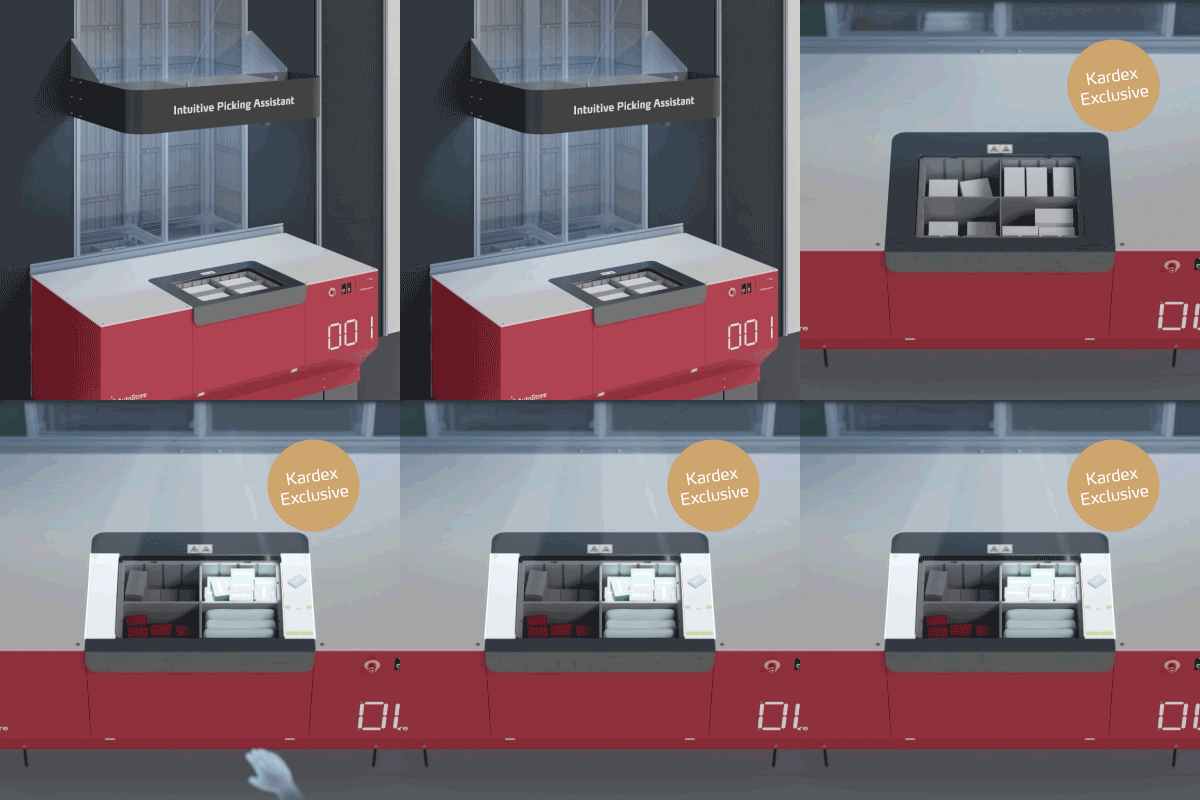
CarouselPort is the most commonly deployed AutoStore Port and is considered the gold standard for outbound picking. It is designed to maintain continuous bin flow to a single operator pick face while minimizing robot waiting.
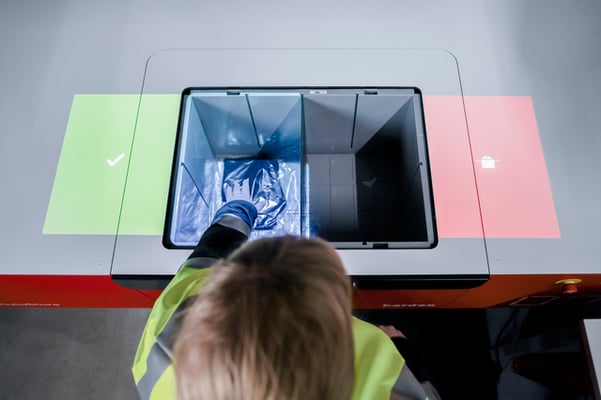 Image: CarouselPort integrated with Intuitive Picking Assistant by Kardex
The CarouselPort uses three independent carriers that swing bi-directionally. Two robot drop-off points feed a single operator position, allowing the next bin to be staged while the current bin is being accessed. This decouples robot drop-off from operator interaction and helps maintain high robot utilization.
Compared to ConveyorPort, CarouselPort has greater mechanical complexity, but that added complexity supports higher throughput and improved balance between robot and operator productivity. When combined with the Intuitive Picking Assistant by Kardex, operators receive visual guidance that improves picking speed and accuracy while reducing manual decision-making.
Performance:
- Up to 500 bins per hour at mezzanine level
- Up to 400 bins per hour at floor level
Is robot drop-off coupled or decoupled with operator interaction? Decoupled.
What's this mean? Read about coupled vs decoupled.
Where to use:
CarouselPort is commonly used in outbound fulfillment where consistent picking speed and balanced robot-operator productivity are important. Typical applications include:
- E-Commerce order fulfillment with moderate to high order volumes
- Retail / omnichannel distribution where orders contain multiple line items
- Parts distribution (automotive, industrial, electronics) with frequent picking activity

ConveyorPortTM
ConveyorPort is the simplest AutoStore Port design. In this configuration, a robot drops a bin onto a short conveyor section that extends out of the grid. While the operator interacts with the bin, the next robot stages above the drop position, ready for the next cycle.
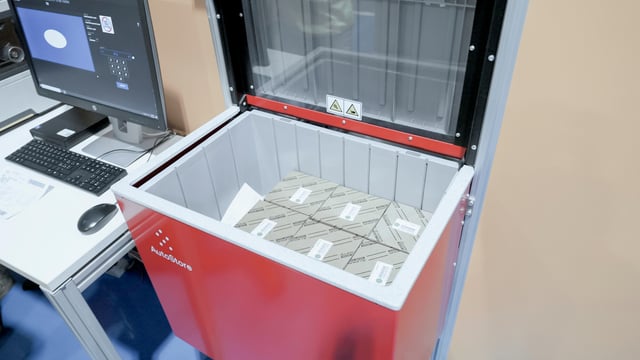
This simplicity is intentional. ConveyorPort has the lowest mechanical complexity and typically the lowest capital cost of the standard Port types.
Performance:
- Up to 240 bins per hour at mezzanine level
- Up to 180 bins per hour at floor level
Is robot drop-off coupled or decoupled with operator interaction? Coupled.
What's this mean? Read about coupled vs decoupled.
Where to use:
ConveyorPort prioritizes simplicity and cost alignment. It is most effective in workflows where operator interaction time naturally exceeds mechanical exchange time, such as:
- Empty bin putaway
- Inbound inventory replenishment
- Processes where robot demand is naturally low relative to task time
In these scenarios, the longer exchange time becomes a smaller portion of total cycle time, and robot utilization remains acceptable. The result is a cost-effective solution that aligns hardware complexity with actual operational need.

VersaPortTM
VersaPort can be thought of as an evolution of the conveyor concept, combining multiple bin presentations into a single unit. It supports multi-Port mode, allowing more than one bin to be presented to serve a single logical workstation.
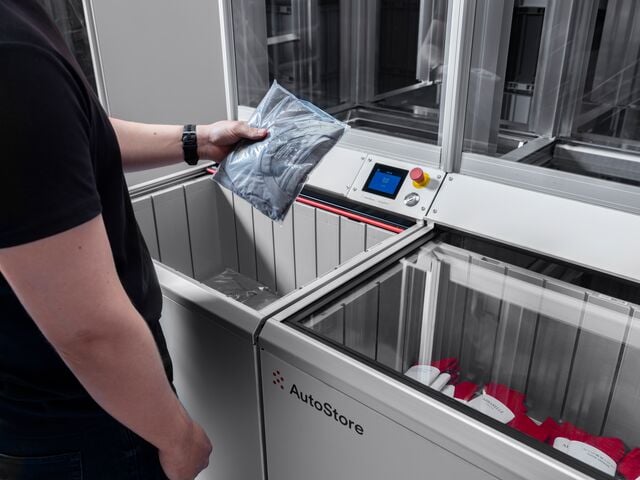
Movement within VersaPort is conveyor-based, and pickup and drop-off remain coupled. However, it enables multi-bin staging, which can improve operator flow in certain workflows compared to a single conveyor Port.
This design provides added flexibility while maintaining a similar cost structure per bin presentation to CarouselPort.
Performance:
- Up to 240 bins per hour at mezzanine level
- Up to 180 bins per hour at floor level for 16-level grids
- Up to 170 bins per hour at floor level for 18-level grids
Is robot drop-off coupled or decoupled with operator interaction? Partially coupled. Multi-bin staging is supported, but pickup and drop-off remain mechanically linked, meaning operator timing can still influence robot waiting.
What's this mean? Read about coupled vs decoupled.
Where to use:
VersaPort is most useful when multi-bin staging provides a measurable operator benefit. It is often selected when:
- Multi-bin staging provides meaningful operator benefit
- Budget does not allow for FusionPorts
- Some coupling between robot and operator timing is acceptable

FusionPortTM
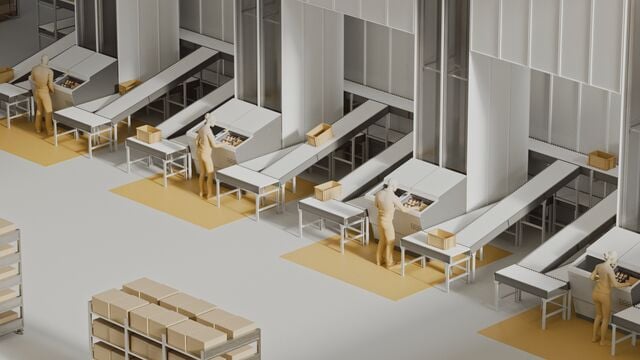
FusionPort has two openings where Bins are presented to the operator for picking which is useful for multi-line order consolidation and batching processes. It allows the robot to deliver the next bin without waiting for the operator to finish with the current one.
Performance:
- Up to 550 bins per hour per Port
Is robot drop-off coupled or decoupled with operator interaction? Coupled.
What's this mean? Read about coupled vs decoupled.
Where to use:
FusionPort is typically justified when labor efficiency is the dominant constraint in the system. It is most appropriate when:
- Labor cost is the dominant driver
- Headcount reduction offsets higher capital spend
- Operator productivity is the system bottleneck

SwingPortTM
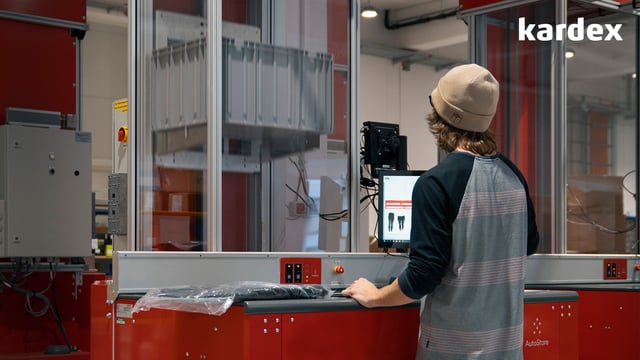
SwingPort is designed for facilities where the AutoStore grid and operator are located on different floors. It is typically paired with Bin Lift and enables bin access below or above the grid surface level.
Performance:
-
170 bins/hr with 8m Bin Lift 2.0 (assuming operator handling time of 15 seconds)
Is robot drop-off coupled or decoupled with operator interaction? Coupled.
What's this mean? Read about coupled vs decoupled.
Where to use:
The SwingPort is typically used to accommodate building layout limitations rather than to maximize picking performance.
-
When Ports cannot be placed on the same level or floor as the Grid

PickUpPortTM
PickUpPort is designed for customer-facing or controlled-access pickup scenarios. Instead of supporting traditional picking workflows, it enables completed orders to be staged inside the AutoStore grid and presented through a secure drawer interface.
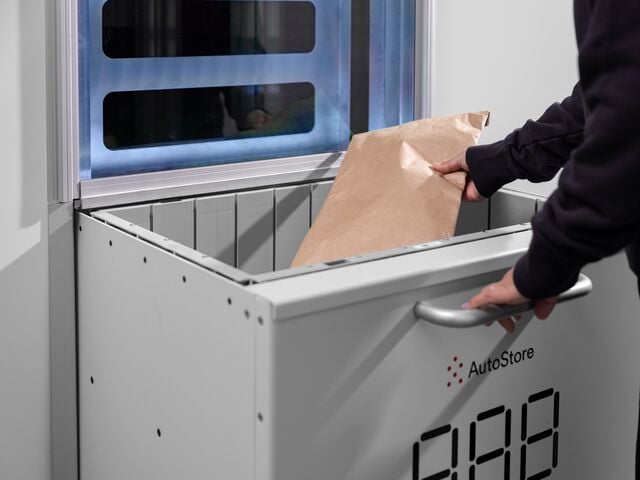
In this model, the picking work has already been completed. When a customer or authorized user arrives at the Port, the system delivers the staged bin to a locked drawer. The user unlocks the drawer, retrieves the contents, and the bin is returned to the grid.
In the case that the PickUpPort is used in a customer-facing application, the final handoff of the order is shifted from warehouse labor to the customer or authorized recipient, further reducing labor costs.
Performance:
-
Technically capable of up to 170 bins/hour (assuming 5-second handling time), though in real-world pickup applications, Port throughput is rarely the primary constraint.
Is robot drop-off coupled or decoupled with operator interaction? Decoupled.
What's this mean? Read about coupled vs decoupled.
Where to use:
- Curbside pickup or click-and-collect environments (i.e. grocery, retail stores, big box store)
- High-security applications requiring controlled access (i.e. diamonds, firearms)
PickUpPort is not intended for repetitive high-speed picking workflows but rather controlled order release.

FusionPort StagingTM
FusionPort Staging is designed for workflows where completed orders are staged inside the AutoStore grid before release.
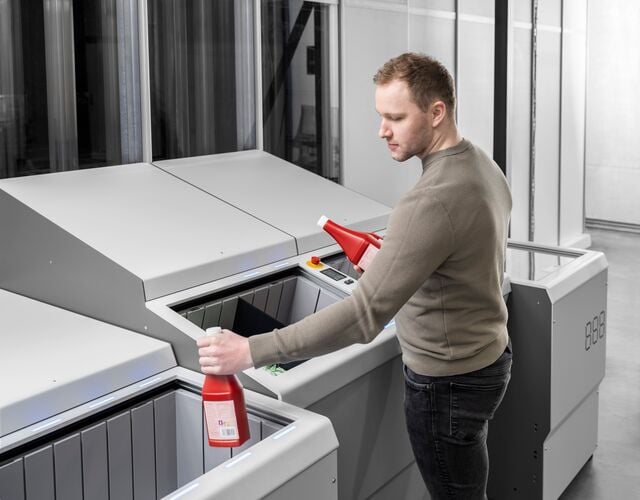
To support staging, the workstation must present both source bins (inventory) and target bins (order containers) simultaneously. FusionPort Staging provides multiple bin openings to allow operators to pick items into an order bin and then return that bin to the grid for temporary storage.
Performance:
-
550 bins/hr
Is robot drop-off coupled or decoupled with operator interaction? Decoupled.
What's this mean? Read about coupled vs decoupled.
Where to use:
-
Retail omnichannel (i.e. buy-online-pickup-in-store)
- Manufacturing and kitting operations (maintenance kits, assembly line prep)
- Applications where floor space for staging is limited

RelayPortTM
RelayPort is designed for high-speed, high-volume fulfillment. Instead of using a simple drop-off point, RelayPort separates the picking position from the robot delivery points. It does this using:
-
A central picking location (called the "Touch") where the operator works
- Conveyor and shuttle modules (called "Tabs") that move bins between robots and the operator
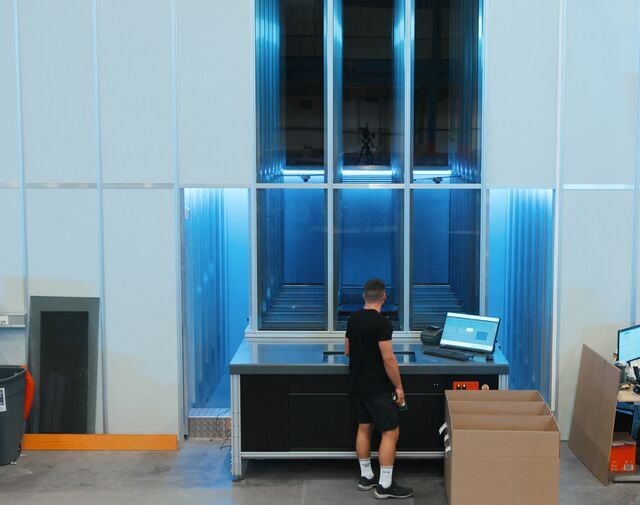
So, robots drop bins onto a small transport system, and that system continuously feeds bins to the operator. While the operator is picking from one bin, the next bin is already on its way.
Performance:
-
Up to 650 bins per hour (with all 6 Tabs installed)
Is robot drop-off coupled or decoupled with operator interaction? Decoupled.
What's this mean? Read about coupled vs decoupled.
Where to use:
- Very high-volume e-commerce fulfillment
- Single-line or low-line-count orders (i.e. on average, an order only contains 1 to 2 items)
- Fast pick-to-bag workflows
RelayPort increases performance by increasing mechanical complexity…and therefore, has a higher cost. So, while it can be the fastest workstation, it’s most appropriate when the operation can consistently sustain high pick rates.

CarouselAITM
CarouselAI pairs the CarouselPort with robotic piece picking, so instead of an operator that picks from the bin, a robotic arm performs the pick and places items into an outbound container.
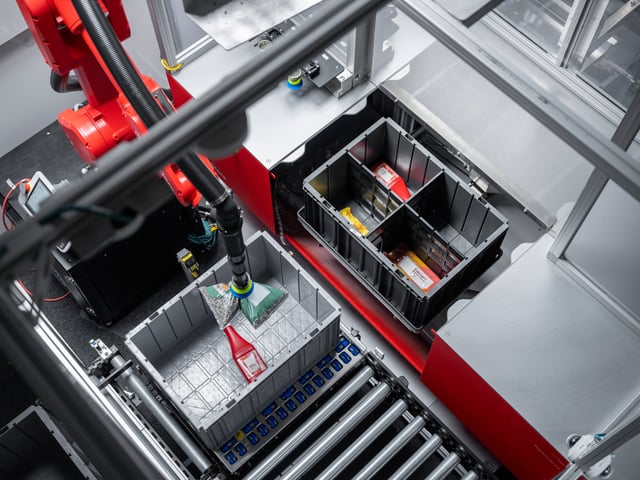
It is designed to handle rigid SKUs (i.e. boxed, plastic, hard-pack items) and bagged apparel (soft goods in polybags).
Performance:
-
Up to 650 units per hour
Is robot drop-off coupled or decoupled with operator interaction? Decoupled.
What's this mean? Read about coupled vs decoupled.
Where to use:
- More than 50% of your SKUs are robot-pickable (below 50%, ROI may be limited)
- Orders are simple and consistent
- Packaged consumer goods, cosmetics, supplements, electronics, boxed parts, etc.
Something to consider: If some SKUs cannot be picked robotically, those bins will be delivered to a manual workstation. If an order requires both robotic and manual picking, downstream consolidation will be required.
CarouselAI is most effective when a high percentage of the order profile can be automated.

VersaAITM
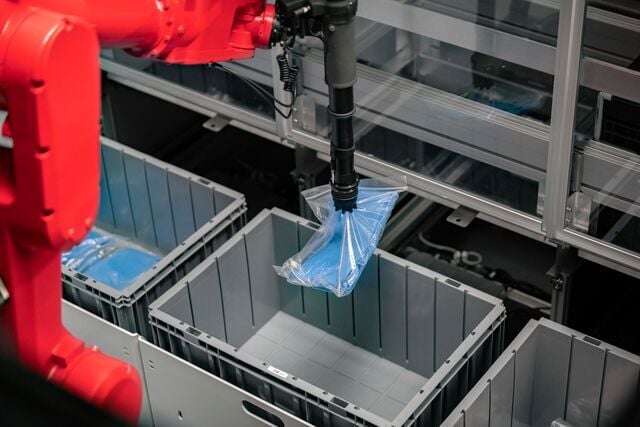
VersaAI is an autonomous robotic picking workstation, and instead of relying on operators for every step, it automates key workflows inside the grid, like order preparation, buffering, and inventory consolidation, so the system can keep working even when people aren’t.
Performance:
-
400 unique picks/hr (floor level)
-
600 unique picks/hr (mezzanine level)
Is robot drop-off coupled or decoupled with operator interaction? Coupled.
What's this mean? Read about coupled vs decoupled.
Where to use:
-
Off-hour order preparation: pre-picks full or partial orders from multiple bins into a single bin, which can be stored back in the grid until they’re needed.
-
Order buffering: Orders can be consolidated and staged directly inside the grid (in bins or final shipping containers), so they're ready to go when packing or downstream processes are ready.
-
SKU / bin consolidation: It automatically merges partially filled bins during off-peak hours, improving storage density and freeing up space for inbound inventory.
-
Integration with downstream systems: Transfers items to conveyors, sorters, AMRs/AGVs, or auto-baggers to support a more fully automated, end-to-end flow
If you noticed, VersaAI looks similar to CarouselAI. The main difference is how each handles the picking container. With VersaAI, AutoStore delivers both the inventory bins and the target tote directly to the robot within the grid. CarouselAI, on the other hand, relies on conveyors to move the picking container to and from the robot.
Because of this, VersaAI is typically a better fit for operations that fulfill orders with several products (e.g., retail replenishment or spare parts), and CarouselAI is a better fit for high-volume, smaller e-Commerce orders.

AutoStore Ports Compared
| Port Type | Best Use Case | Robot Utilization | Operator Efficiency | Relative Cost |
| CarouselPort | Outbound Picking | Good | High | Medium |
| ConveyorPort | Inbound / Putaway | Moderate | Moderate | Low |
| VersaPort | Multi-bin workflows | Moderate | High | Medium |
| FusionPort | Reduce high labor costs | Moderate | Very High | High |
| SwingPort | Multi-level operations | Moderate | Moderate | Medium |
| PickUpPort | Curbside Pickup | Good | N/A | Low |
| FusionPort Staging | Consolidation | Moderate | Very High | High |
| RelayPort | Outbound Picking | Very Good | Very High | High |
| CarouselAI | Outbound Picking | Good | N/A | Medium |
| VersaAI | Consolidation, Order Prep, Buffering | Good | N/A | Medium |
The workstation mix in an AutoStore system doesn’t just influence workflow performance — it can also affect the overall cost of the system.
Different Port types vary in mechanical complexity, automation capability, and infrastructure requirements. As a result, the number and type of workstations selected during system design can meaningfully influence capital investment.
For a deeper look at how AutoStore system design impacts cost, read:
How Much Does AutoStore Cost? What The Brochures Don't Tell You
Final Thoughts: Justifying the Right Port Mix
Port selection is not about picking the “fastest” Port but rather about aligning hardware cost with the true constraint in your operation.
- If robots are expensive → protect robot utilization
- If labor is expensive → prioritize operator efficiency
- If inbound dominates → don’t over-engineer
The best AutoStore designs use multiple Port types, each placed intentionally based on the process they support.
This is where experience, simulation, and honest trade-off discussions matter far more than spec sheets.
Whether you’re just beginning to evaluate AutoStore or have already selected it and are now looking for the right AutoStore integration partner, we’re here to help. Connect with us to tell us about your operation and receive workflow-specific feedback.