
The aviation industry has boomed back from a COVID-era slowdown. The Oliver Wyman Global Fleet and MRO Market Forecast for 2025-2035 notes that “the global aviation industry is flying high — setting records in passenger numbers and global revenue,” but production has struggled to keep pace with record-setting demand. Aircraft manufacturers are pushing to scale, and a record-setting global fleet of 38,300 commercial airliners is projected by 2035.
Global fleet forecast by aircraft class, 2025-2035.
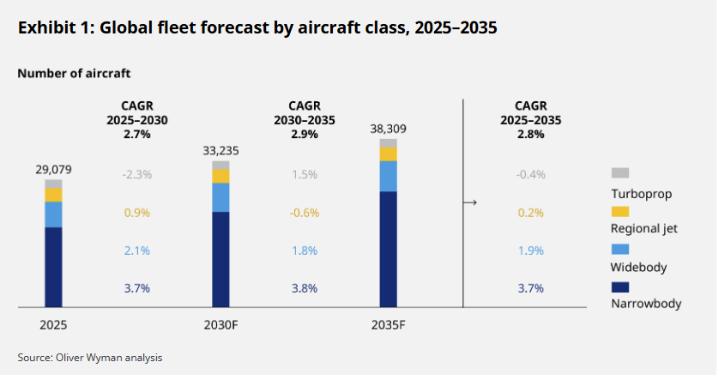
Larger fleets mean more pressure on both aircraft production lines and maintenance centers.
Alongside airlines and MRO providers, there are organizations designing, building, and supporting space vehicles such as rockets, satellites, and launch systems for government programs and commercial space companies. These teams face similar pressures around production speed, quality, and program timelines, whether they are ramping up a new narrow-body platform or preparing a satellite constellation for launch.
Aerospace facilities run on a carefully tuned balance of precision, speed, and traceability. From maintaining aircraft to managing production lines, every part and tool must be accounted for at all times, ready to deploy at a moment’s notice, and handled with absolute accuracy.
Disorganized or inaccessible inventories can lead to both chronic inefficiencies in MRO work and highly costly operational disruptions.
Automated storage systems give aerospace teams the control they need.
By improving how parts, tools, and assemblies are stored, tracked, and retrieved, ASRS technology helps both aviation and space operations gain control of complex, high-value inventory. The result is a more reliable backbone for MRO stockrooms, component warehouses, and high-precision manufacturing and integration facilities.
In this article, we’ll look at why automated storage is such a valuable tool across the aerospace sector. We will explore how it helps manufacturers, tiered suppliers, and MRO organizations manage complex inventory, and we will highlight the specific technologies that make fast, secure, and compliant storage possible.
The Benefits of Automated Storage for the Aerospace Industry
Aerospace operations present some of the most demanding storage environments in the world. MRO and manufacturing teams are responsible for managing thousands of SKUs, many of them high-value, tightly regulated, and subject to strict batch-level traceability. In defense applications, the security stakes are even higher.
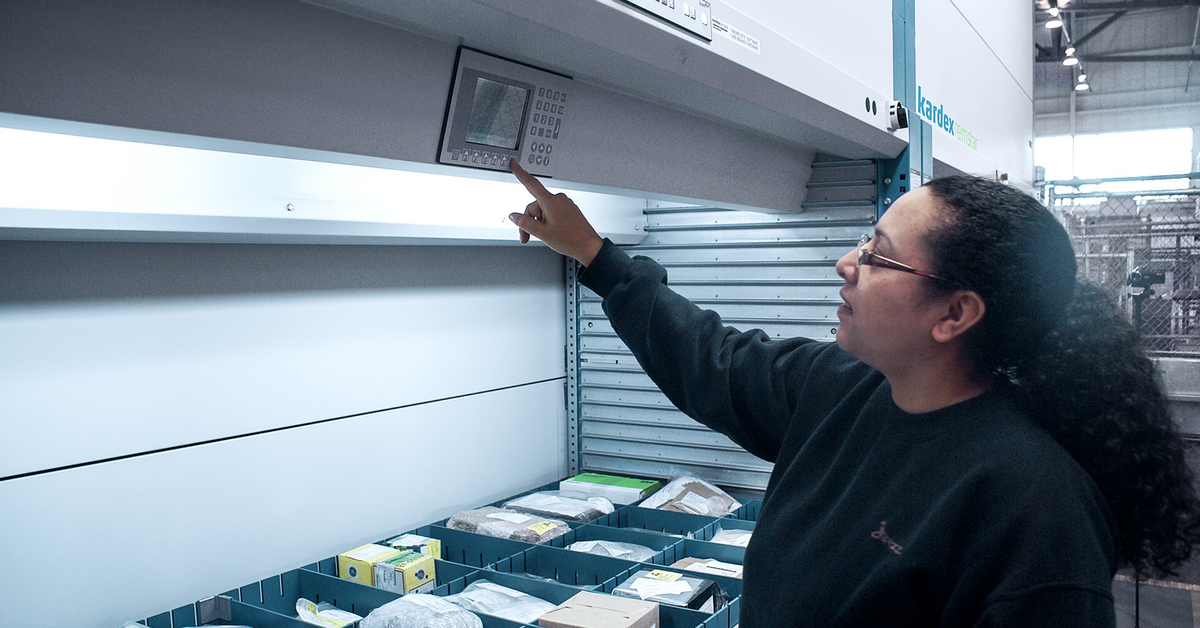
In this context, the cost of any inefficiency is steep. A missing or delayed part can ground an aircraft, stall a production line, or cascade into schedule disruptions that ripple across fleets and supply chains. With so much at risk, more and more aerospace facilities have determined that they can no longer rely on manual shelving and paper logs. Instead, they can boost productivity, mitigate operational risks, and achieve immediate ROI from an investment in automated storage systems.
1. MRO Inventory for Aerospace Facilities
For MRO spare parts and tool storage, the combination of secure, enclosed storage and software-driven tracking provides a multi-faceted upgrade over manual shelving and paper-based methods.
2. Chain of Custody and Batch-Level Traceability
Every component in aerospace MRO requires a complete audit trail. Automated storage simplifies this by automatically logging each access, recording batch numbers, and tying every transaction to a technician ID or job number. For example, the Kardex Power Pick System can capture batch-level data the moment a storage tray is accessed, ensuring regulatory and compliance standards are met without slowing down urgent maintenance work.
3. Faster Response Times for AOG
When an aircraft is grounded, time is measured in revenue lost by the minute. Automated systems eliminate guesswork by delivering the correct part in seconds. Operators can scan a barcode or select a part in the software interface, and the system brings the right tray directly to the access point. Pick-to-light guidance then pinpoints the exact item, making retrieval both fast and error-free.
4. Enhanced Security and Access Control
Many aerospace components are high-value, and traditional shelving offers little real protection. Automated storage enforces strict access controls, limiting retrieval by user, role, or even part number. Each transaction is time-stamped and tied to an operator ID, creating a full digital record of who accessed what, when, and why.
5. Automated Storage for Aerospace Manufacturing Operations
Automated storage helps keep aerospace manufacturing processes running smoothly by protecting sensitive parts, organizing tools, and ensuring everything arrives on the line exactly when needed.
6. Secure Storage of High-Value Tools and Small Parts
Aerospace production relies on thousands of small but critical components, from precision fasteners to specialized cutting tools. Left on open shelving, these items are potentially vulnerable to dust, damage, or accidental loss. Automated storage encloses them in trays that stay protected until requested, while access controls ensure only authorized staff can retrieve sensitive or high-value parts. The result is cleaner inventory, tighter security, and fewer costly disruptions to production runs.
7. Improve Accuracy with Kitting
Building an aircraft requires perfectly sequenced parts and tools arriving at the line exactly when needed. Automated systems make this easy by supporting batch picking and kitting. Operators can generate complete kits on demand, with trays and pick-to-light guidance ensuring every piece is included. These kits can be staged ahead of time or delivered just-in-time, eliminating delays on the line and cutting down on errors that lead to rework.
8. Save Space and Increase Throughput
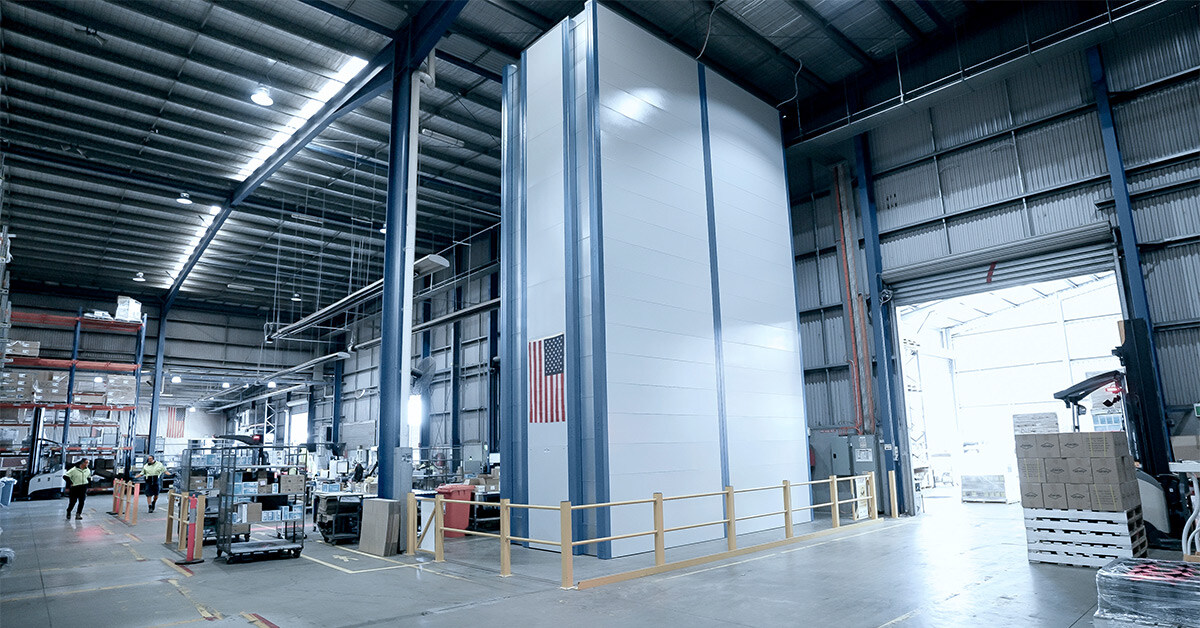
Traditional shelving sprawls outward, consuming valuable production floor space. Automated systems make use of vertical storage to flip that model, reclaiming up to 85% of wasted square footage by consolidating inventory into compact towers. The recovered space can be used for additional production or inspection stations, allowing manufacturers to boost output without expanding the facility footprint.
9. Keep Inventory at Point of Use
Every extra step between a technician and their parts costs time. Automated storage can be placed directly on the production floor, so trays are delivered to the workstation in seconds. Less walking means faster assembly, smoother handoffs between teams, and more time spent on the skilled, revenue-generating work of building aircraft rather than searching for parts.
Automated Aerospace Storage in Action
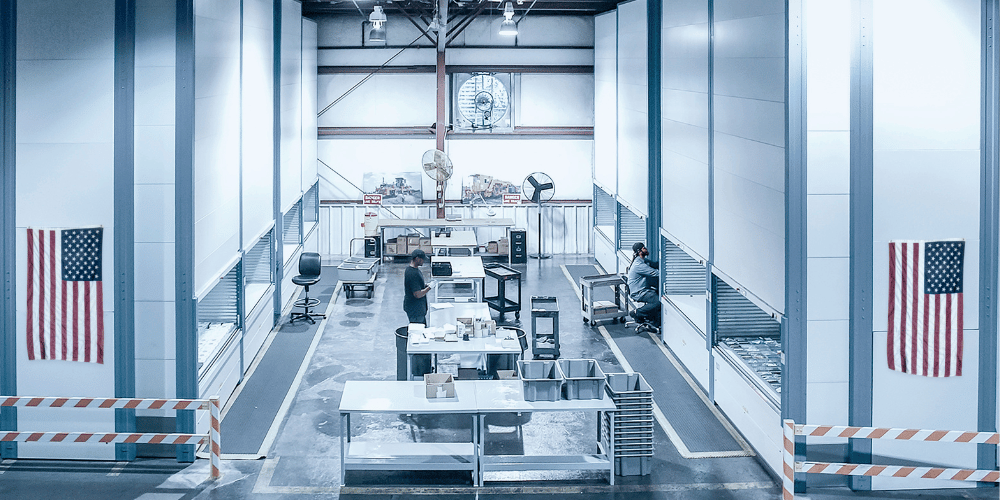
Jazz Aviation, a regional carrier operating across the US and Canada, maintains more than 120 aircraft from its main base in Toronto. With a 24/7 maintenance schedule and responsibility for supporting five additional line bases, efficiency and accuracy in parts management are critical.
Before automation, technicians often had to sift through dozens of items to locate the correct batch number, a slow, labor-intensive process in an environment where every minute counts. After searching for the right solution, Jazz implemented two Kardex Shuttle Vertical Lift Modules integrated with the Power Pick System. Alongside pick-to-light technology, a four-position batch station, and label printing, the system now guides operators directly to the right part and simplifies inter-facility shipments.
The results were striking, but representative of the incredible potential of automated storage systems for aerospace: pick accuracy rose to 99%, MRO productivity increased by 77%, and storage space requirements dropped by 71% compared to traditional shelving.
Learn more about how they achieved these impressive gains in our full case study here.
Did you know?
 Kardex Shuttle systems are proudly American made and we support aerospace storage in a number of military bases across the nation.
Kardex supports military cybersecurity with CMMC-compliant solutions.
>> Learn More: Automated Storage Systems for the Military/DOD Industry from Kardex
Technology that Supports Aerospace Automation
Automated storage in aerospace relies on a combination of hardware and software technologies that work together to secure parts, streamline access, and guarantee compliance.
1. Kardex Shuttle Vertical Lift Module (VLM)
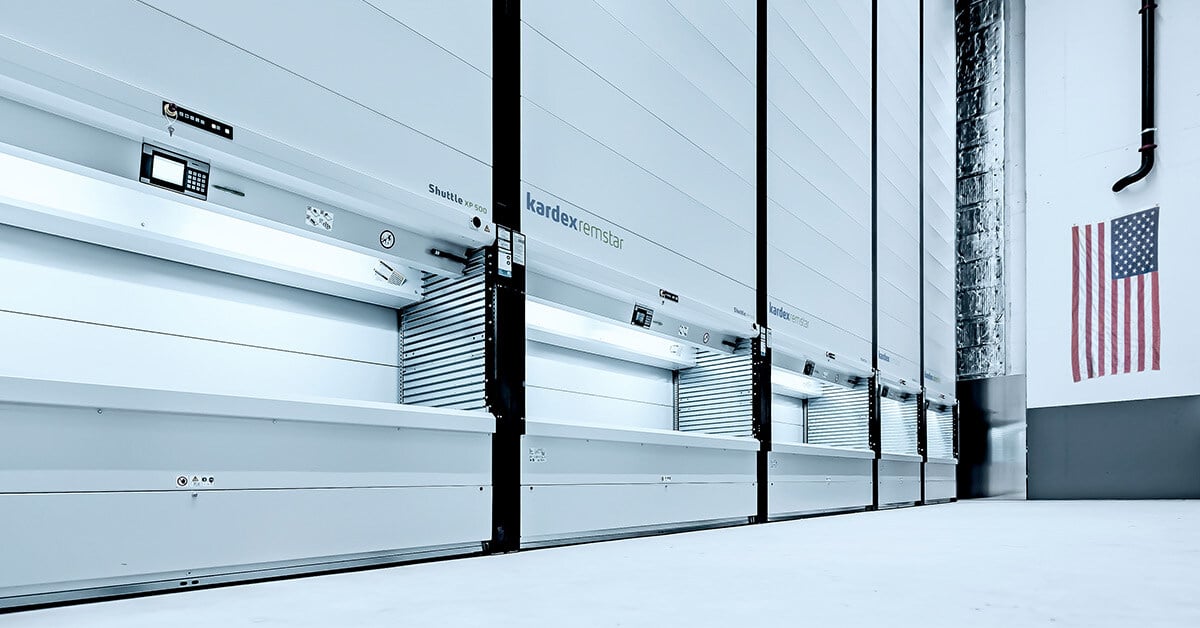
The Kardex Shuttle VLM is an enclosed, automated storage tower that operates on the goods-to-person principle. Trays are stored vertically inside the unit and automatically delivered to an access point at the push of a button. For aerospace, this means high-value or sensitive parts are protected from dust and damage while being stored in a fraction of the footprint required by shelving. Flexible tray designs also allow a single unit to handle both heavy tools and delicate components, all in a secure environment.
2. Kardex Power Pick System
Kardex Power Pick System is a modular inventory management software that serves as the digital control layer for automated storage. Every transaction is logged with batch numbers, operator IDs, and timestamps, providing a full audit trail. For aerospace facilities, it integrates seamlessly with ERP systems to support cost center tracking, regulatory compliance, and lot-level traceability without slowing down daily operations.
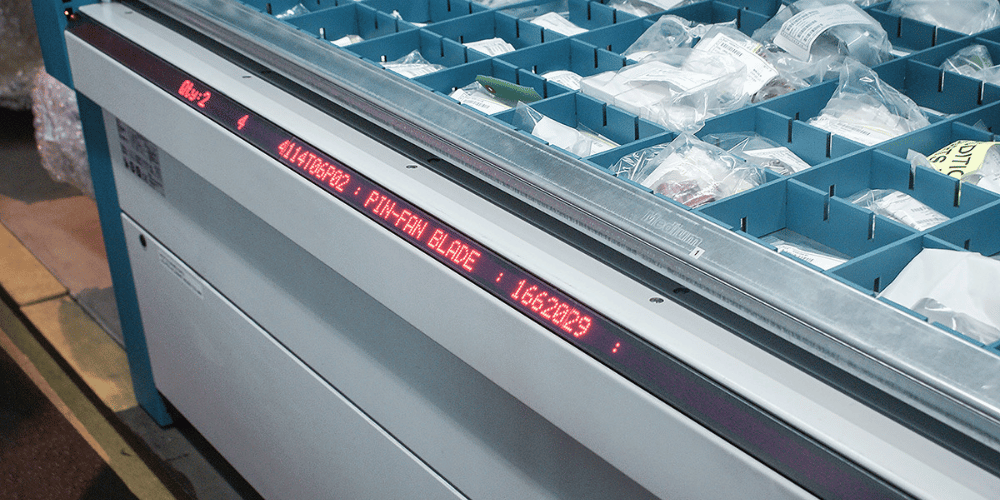
3. Pick-to-Light & LED Navigation
Pick-to-light technology uses illuminated indicators and LED navigation to guide operators directly to the correct part in a tray. This visual confirmation boosts accuracy to 99.9% and speeds up retrieval, which is critical in aerospace where a single mis-pick can cause costly delays or safety concerns.
4. Pick Verification Tools
Built-in pick verification capabilities safeguard against human error. Options include:
- Scan Verification: Handheld or fixed RF scanners validate items against barcodes, reducing errors and eliminating the need for downstream quality checks.
- RFID Verification: Tags with embedded circuits allow data capture without line-of-sight, giving full visibility into a part’s location throughout its lifecycle.
- Picture Database: Operators see a photo of each SKU during the pick process, reducing errors caused by complex part numbers or lookalike components
How Can Automated Storage Support Your Aerospace Operations?
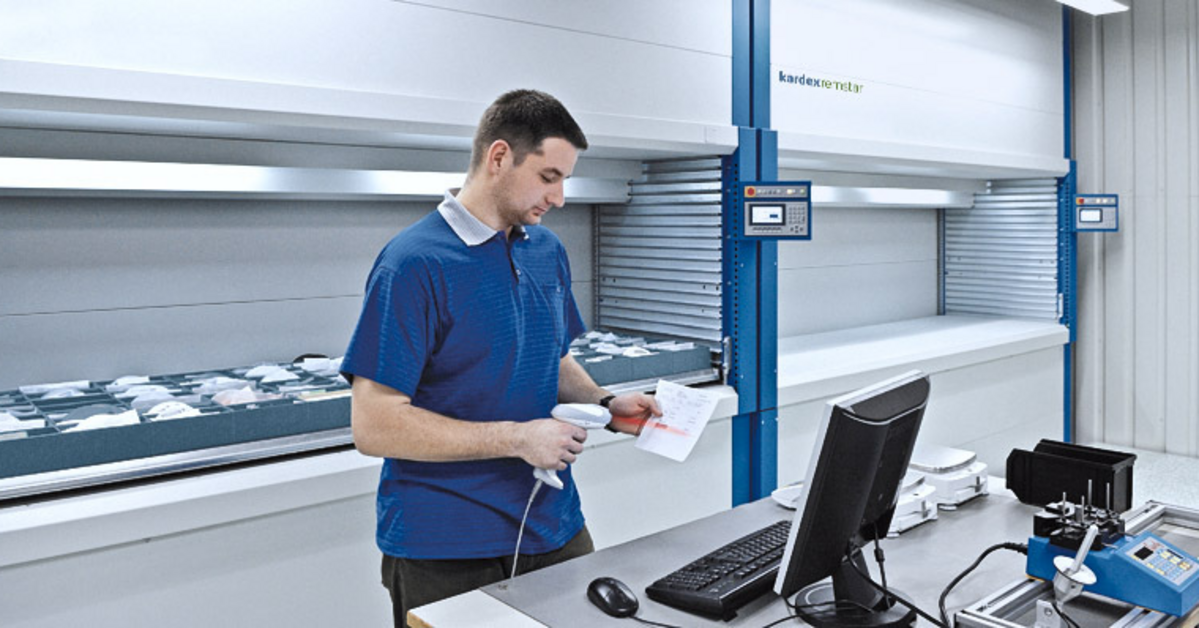
Automated storage systems give MRO teams and production lines the ability to cut downtime, maintain full traceability, and make better use of limited floor space, all while keeping sensitive inventory secure.
>> Check out the Kardex Shuttle VLM in action
If you’re ready to see how automated storage could transform your aerospace operations, book a free site visit today. Our team can help configure a system tailored to your facility and provide a custom quote to match your requirements.

