
Companies that want to upgrade to a Vertical Lift Module (VLM) often begin by assessing their current space, attempting to translate the project into square footage and budget dollars. A common question we often get from these companies is, "Do I need one machine or two?"
But starting with "how many" isn’t necessarily what you should be asking.
To get the VLM system that’s right-sized for your operations, you should instead ask, "What are my storage and throughput goals, and how does that translate into the right number of machines?"
Think of it this way: If your operators are waiting on one machine to fulfill an order, you have a design problem and your VLM is not going to deliver the return on investment you’re looking for. Optimizing your space requires you to think holistically about your operations, staffing, space, and desired output.
In this post, we’ll show you how to evaluate this design decision based on your inventory, your order profile, and how you want your team to work.
How to Determine How Many Vertical Lift Modules You Need
Step One: Quantify What You Need to Store
The first step is to fully evaluate your inventory needs. Quantify your total SKUs, average and peak inventory levels, and the physical characteristics of your items, such as the size, weight, and any special handling requirements.
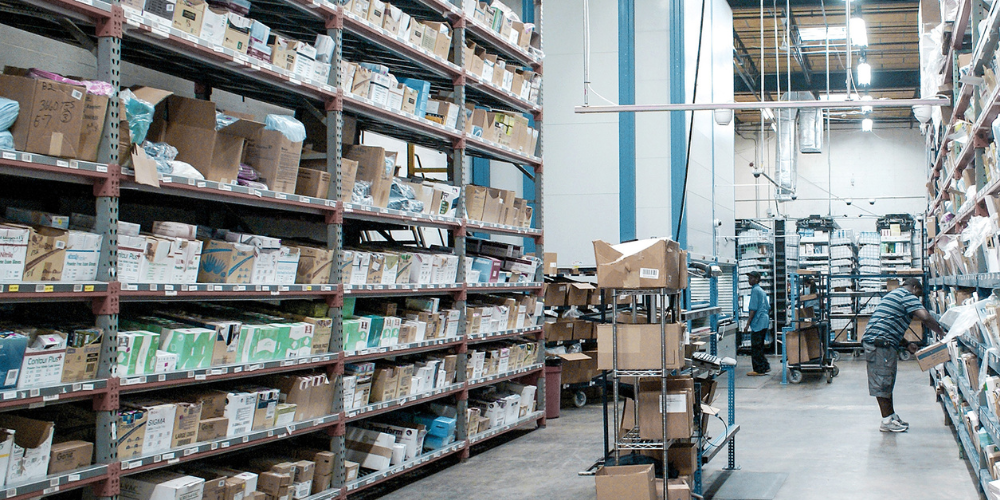
Next, determine what items should be moved. Not everything belongs in a VLM. Some items are better suited for pallet racking, bulk storage, or floor stacking. Focus on identifying your "VLM candidates," or the items that will benefit most from automated storage and retrieval.
Finally, make a rough estimate of how many trays your inventory will require if fully consolidated, based on the data you’ve gathered and the VLM’s specs.
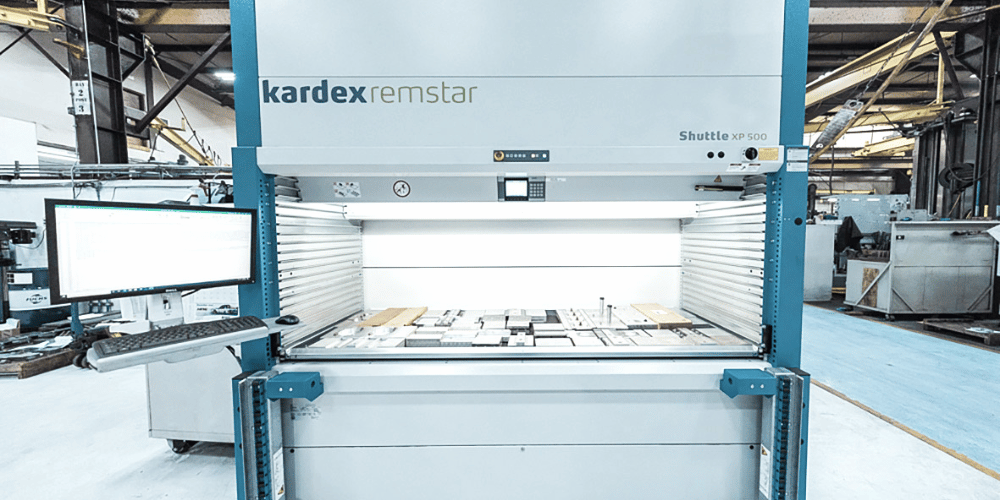
For example, the Kardex Shuttle offers a wide range of heights, tray widths, and depths, as well as tray weight capacities. Depending on your configuration, you can choose from the Kardex Shuttle 250/500 for loads up to 1,223 pounds, the 700 for medium loads up to 1,598 pounds, or the 1000 for heavy loads and even pallets up to 2,204 pounds per tray.
>>> Just getting started with warehouse automation? Here's a complete guide.
Step Two: Balance Space, Throughput, And Order Profiles
Not every VLM project starts from the same pain point. Some operations are constrained by space first. Others are constrained by speed. Your design needs to reflect which problem is louder in your world.
If you are a lab, an R&D facility, or a small operation storing product samples or cabling that you access 10–12 times a day, space optimization may be your primary driver. In those environments, it can make perfect sense to prioritize one taller machine that consolidates as much shelving as possible into a small footprint, even if you are not pushing high lines-per-hour.
In a high-speed distribution center, the bottleneck looks very different. There, throughput leads the design. You might be processing hundreds or thousands of order lines per hour, and the biggest risk is people standing and waiting for the next tray to arrive.
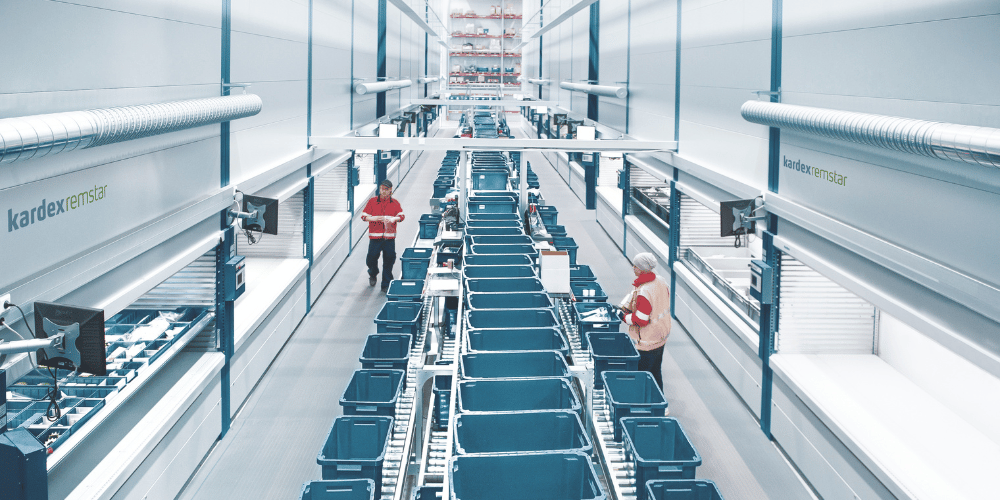
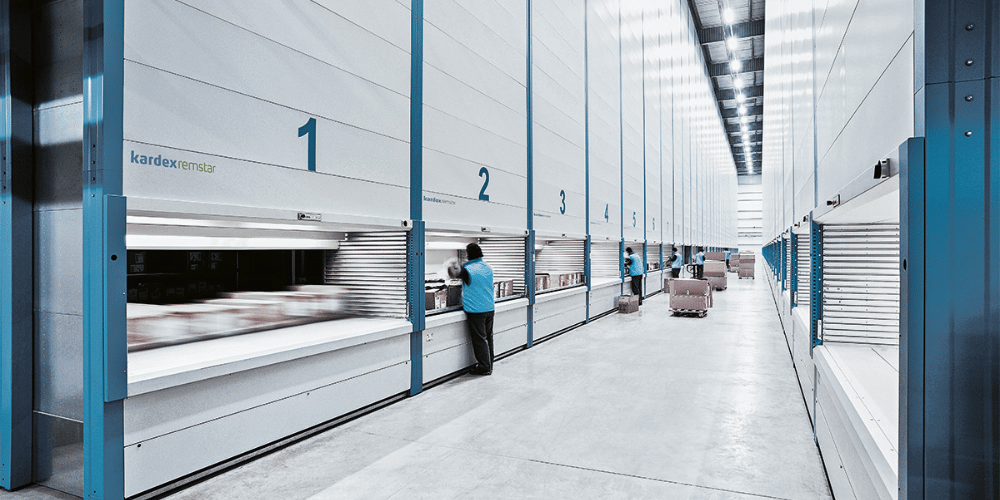
That is where multiple machines working in parallel shine. When you split inventory across two, three, or more VLMs and connect them with software, you can batch orders so several machines move at once. While an operator is picking from one machine, the other units are already retrieving the next trays. No one waits, and everyone stays productive.
Even within a single machine, you can tune performance. Vertical zoning keeps fast movers closer to the access opening so tray travel stays short, while slow movers live higher in the unit where a bit of extra travel time will not affect overall pick rates.
To decide how important throughput really is for you, map your current and target lines per hour and your access frequency:
- How many lines per hour do you need to support at peak?
- How often do operators need to access the items you plan to store in the VLM?
- At peak volume, would a single machine keep up without people standing idle, or will a pod of two or more units keep your team flowing?
If your primary pain is space and access is relatively light, you may be better served by fewer, taller machines that squeeze the most out of your cube. If your primary pain is speed, you may want shorter, faster machines in a pod configuration so multiple operators can work simultaneously without waiting.
Step Three: Consider Layout, Labor Model, And Ergonomics
The number of machines you need ties directly to how many people will staff the area and how they will move through their work. Once you understand the balance between space and throughput for your operation, your labor model helps you decide whether that balance is best achieved with one tall machine, a pod of shorter units, or some combination of both.
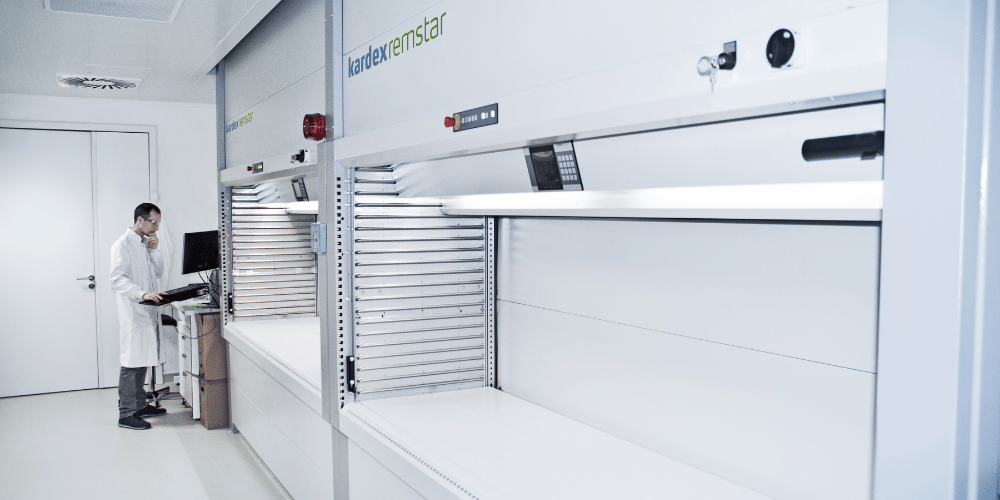
For a single-operator environment, such as maintenance cribs, tool storage, or low-volume parts operations, one VLM often makes perfect sense. In a distribution center with multiple employees accessing the VLM, you’ll likely need a pod configuration. This allows one or more operators to work efficiently, rotating between multiple pick faces and reducing walk time. This setup also reduces congestion at a single access opening, improving both speed and ergonomics.
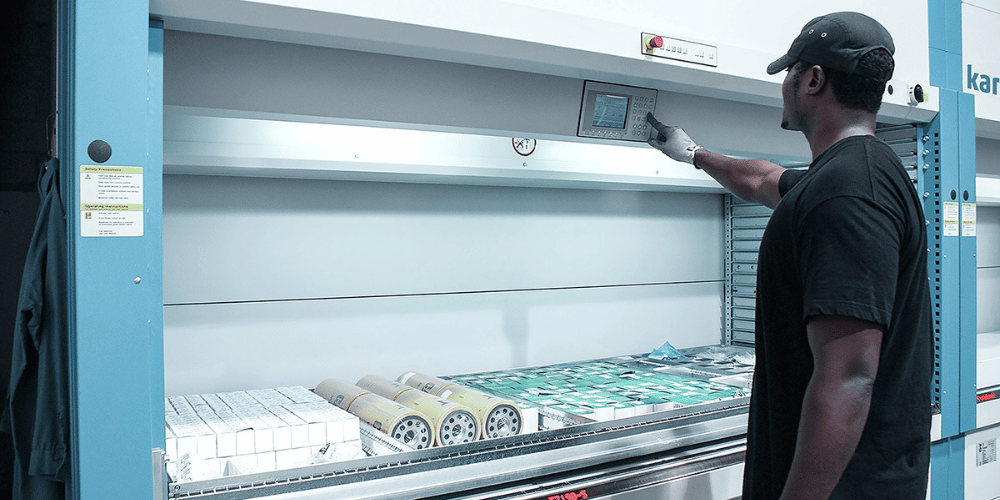
Ergonomics and worker safety are essential to keep operations running smoothly, and the right number of VLMs can improve ergonomics. Operators aren't climbing ladders, bending down to floor-level shelves, or reaching 40 inches deep into pallet racking. Everything comes to them at the ideal pick height, the "golden zone" between waist and shoulder.
Ergonomics also delivers return on investment benefits. One Kardex customer got full ROI on its VLM within a year, with the entire savings coming from eliminating carpal tunnel injuries and workers' comp claims.
Step Four: Segment Inventory Across Machines Wisely
One of the ways you can get more out of your VLM investment is by segmenting inventory strategically. Developing a storage strategy that helps maximize space and reduce retrieval and fulfillment time can help you decide whether you need one machine or multiple.
Vertical zoning helps deliver inventory more efficiently, even within a single machine. Items that are frequently used are positioned near the access opening, while slow movers are placed up high.
When you have multiple units, you can take segmentation much further. For example, you can dedicate:
- One machine for high-velocity SKUs used in daily order picking.
- One for slow movers or spare parts.
- One for secure or high-value items with restricted access.
To develop your storage strategy, classify your inventory by velocity and sensitivity, taking into consideration the item’s value, access controls, and traceability requirements. Decide if separate machines for different inventory classes would reduce congestion or risk, and how to divide inventory based on these categories. With this approach, your company can improve throughput, simplify slotting, enhance security, and streamline cycle counting.
Step Five: Think About Redundancy and Uptime
VLMs are a capital investment and should be part of your ongoing investment planning and maintenance strategy. Part of this is implementing a preventative maintenance schedule. As you design your VLM system, you will need to consider how to handle downtime and access to important items.
If a single machine goes down for maintenance, all the inventory it holds becomes temporarily unavailable. Kardex Life Cycle Service and preventive maintenance programs reduce downtime; however, if you have mission-critical inventory housed within a single VLM, performing scheduled maintenance will have operational impacts.
With multiple VLMs, you can perform maintenance on one unit while others remain in service. As you explore your VLM options and consider how many you need, think about building redundancies that ensure your operation continues to run smoothly.
Step Six: Plan For Growth, Not Just Today’s Needs
The last thing your company needs is to make a large investment, only to have your storage needs change three years later. The goal should be to plan for growth without overbuying.
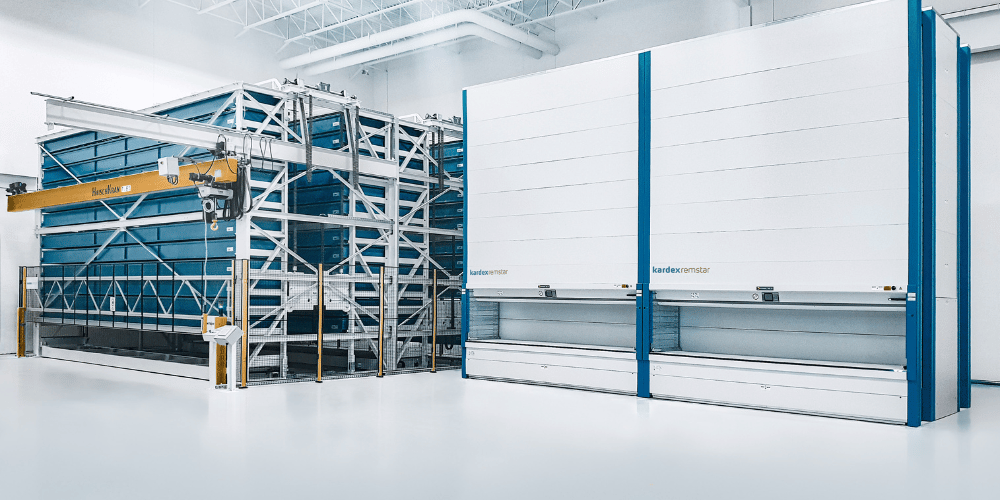
One of the great things about Kardex VLMs is that they are designed to grow with you. Kardex Shuttle units are modular. You can start with one or two machines, validate your workflow and ROI, then add units as volume increases. Many operations use full vertical height initially, then expand horizontally by adding machines rather than getting more machines than you need at the outset.
Deciding how many VLMs are needed for your operations in the long term begins with planning short-term. Start with a configuration that meets your needs today and use three- to five-year growth projections to develop a clear expansion plan. That way, when the need for more storage arises, you’ll have the data to expand confidently.
Many companies we work with have been successful with this approach. They start with one or two units, then validate their workflow ROI to assess if there is additional potential for efficiency or savings. Growing companies typically opt for a pod configuration as volumes increase.
Example Scenarios
Here are some real-world use case examples across different operation types to help illustrate how these different considerations all factor into the “how many VLMs” decision. In each case, the “right” configuration reflects a different balance between space, throughput, and ergonomics, which is why copying another company’s VLM count rarely works.
How Many Vertical Lift Modules for a Tool Room or MRO Crib?
-
Typical configuration: One VLM, possibly two for separation of duties or redundancy.
-
What makes this work: A single machine is a great fit in these environments because you typically have one operator at a time accessing parts. The focus is on maximizing vertical space, often going as tall as your ceiling allows, to consolidate multiple storage locations into one footprint.
If you're supporting multiple shifts or departments, consider two machines to create redundancies during maintenance and allow separation between consumables and critical spare parts. By integrating with work order systems, you ensure technicians can quickly retrieve everything needed for a job in the right sequence.
How Many Vertical Lift Modules for a Mid-Volume Manufacturer?
-
Typical configuration: Two to three VLMs positioned strategically across the facility.
-
What makes this work: This configuration is successful because you’re splitting the machines by function, not just by capacity. One VLM near receiving handles incoming materials, kitting, and staging for production. One or two additional machines feed active production lines with components, sub-assemblies, and hardware. By using vertical zoning within each machine, you can replenish the line fast without keeping operators waiting.
If you're running multiple shifts, software batching allows you to stage materials for upcoming jobs while current production continues. Consider utilizing the Kardex Power Pick System for real-time inventory visibility and accurate parts tracking across multiple machines.
How Many Vertical Lift Modules for a High-Volume E-Commerce Distribution Center
-
Typical configuration: Three or more VLMs in a pod configuration, fully integrated with warehouse management software.
-
What makes this work: Multiple machines eliminate wait time. While an operator picks from one VLM, the other units are already retrieving the next trays. Software batches the orders intelligently, grouping picks by location and priority to maximize throughput.
Add to this pick-to-light technology or LED Navigators that guide operators to exact tray positions, reducing pick errors even during peak volume. Other VLM features like color-coded batch picking systems boost efficiency by allowing multiple operators to work simultaneously on different order batches without confusion.
Plan for seasonal spikes. The pod configuration scales labor easily so you can add operators during peak periods and rotate workers between machines to maintain speed.
How Many Vertical Lift Modules for Automotive or Heavy Parts Storage
-
Typical configuration: Kardex Shuttle 1000 units with integrated crane systems or tray extraction devices.
-
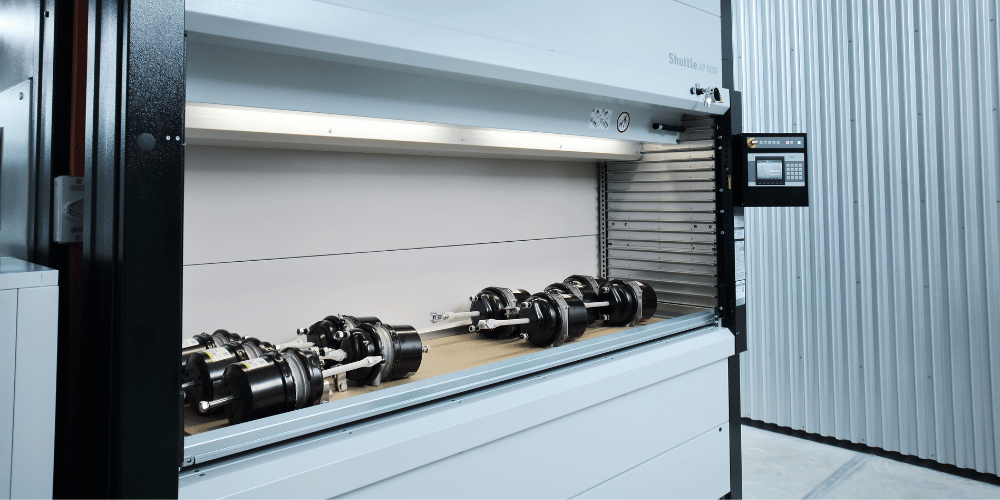
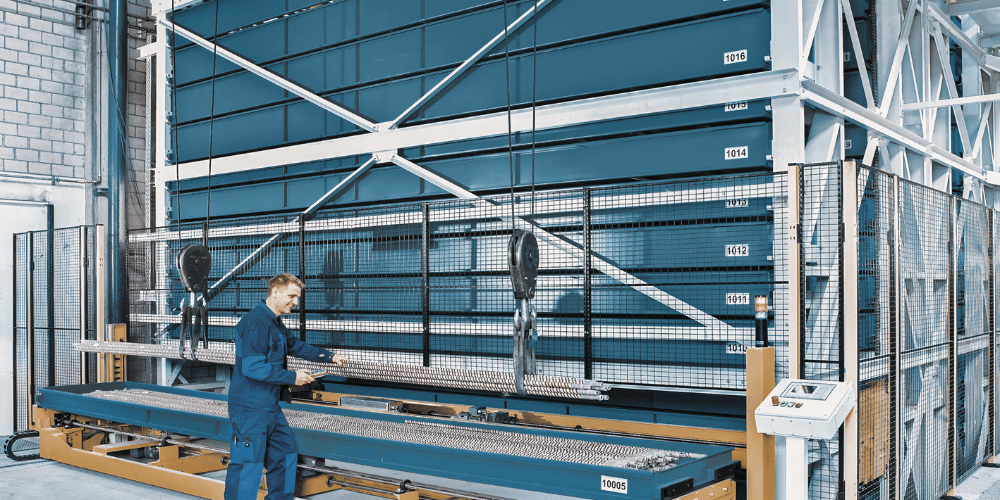
What makes this work: When you're storing heavy components, such as transmission parts, large fabrications, or palletized materials, ergonomics becomes crucial. The Shuttle 1000 handles loads up to 2,204 pounds per tray, and optional crane integration means operators never manually lift heavy items.
Full tray extraction brings the entire tray out to an accessible work surface, allowing use of hoists or other material handling equipment. This can transform the safety of handling bulky or heavy inventory.
Plan for the additional space needed in front of the machine for tray extraction and crane operation. These aren't just storage systems; they're complete material-handling workstations.
>>> How much will your Vertical Lift Modules cost? Find out in our complete VLM pricing guide.
Ask “What Do We Want This System to Do?”
In each of the scenarios listed above, there are multiple factors specific to each operation. What you won’t see, however, is calculations based on “units per square foot.” The right number comes from your data and your operational goals, not industry averages.
Each VLM scenario is shaped by:
- Throughput requirements
- Inventory characteristics
- Workflow design
- Integration strategy
Right-sizing starts with understanding your storage facility and operations, relying on data not guesses to find the right solution. If you're evaluating VLMs for your operation, start by gathering your SKU data, order profiles, and layout constraints. Then have a consultative conversation with a Kardex expert who can help you design a system that actually fits your operation, not just the space on your floor.
Ready to figure out what the right number looks like for you? Contact Kardex to discuss your specific requirements.

