
|
2X Picking Speed |
Labor Reallocation
|
Growth without Expansion |
| Able to pick double the amount of SKUs in the same time frame. | More than 6 employees were redeployed to higher-value tasks | Able to scale its business within the existing facility. |
Case at a Glance
WEG implemented an AutoStore™ goods-to-person system at its U.S. headquarters in Duluth, Georgia to support growing small-parts inventory while improving warehouse performance without expanding the building footprint.
As demand for small parts grew, WEG’s Duluth distribution operation faced increasing pressure on space, inventory accuracy, and delivery performance. By implementing an AutoStore system supported by Kardex FulfillX software, the company increased storage density,
improved picking speed, and optimized warehouse space while maintaining operations inside its existing headquarters facility.
Scaling inventory in existing facilities
Customer and Task
WEG Electric Corp.’s U.S. headquarters in Duluth, Georgia supports engineering, sales, and distribution operations across North America. As the business expanded, small parts inventory grew rapidly, creating challenges in storing and managing material within the existing warehouse footprint. Inventory accuracy became harder to maintain and order fulfillment performance was increasingly strained.
With limited space available and rising real estate costs, WEG needed a solution that could increase storage density and operational efficiency without expanding the facility.
The Solution
This approach eliminates manual travel through aisles while improving inventory visibility and picking efficiency. Integrated with WEG’s ERP system through Kardex FulfillX software, the solution provides real-time inventory control and structured order fulfillment.
Scaling within HQ
-
The Duluth warehouse supports a wide range of activities within WEG’s U.S. headquarters, including engineering support, customer service, inside sales, and national distribution operations. As the business expanded across North America, the facility began handling increasing volumes of small-parts inventory required to support these activities.
-
Over time, the warehouse layout struggled to keep pace with this growth. Small parts were stored across multiple locations throughout the facility, making it more difficult for operators to locate material quickly and maintain consistent inventory accuracy.
Several operational challenges began to emerge:
Increasing small parts inventory: Rapid growth in SKUs created pressure on available storage locations within the warehouse footprint.
Manual fulfillment bottlenecks: Paper picking lists and forklift retrieval restricted speed and traceability.
Limited space for expansion: The Duluth headquarters facility had limited capacity to expand storage areas without costly real estate changes.
Fulfillment performance pressure: As order volumes increased, manual storage and retrieval processes made it harder to maintain consistent delivery performance.
Mixed storage environments: Small parts and pallet inventory were spread across the warehouse, reducing space efficiency.
- To support continued business growth, WEG needed a solution that could increase storage density, improve operational control, and modernize warehouse processes without expanding the facility.
Automation for operational control
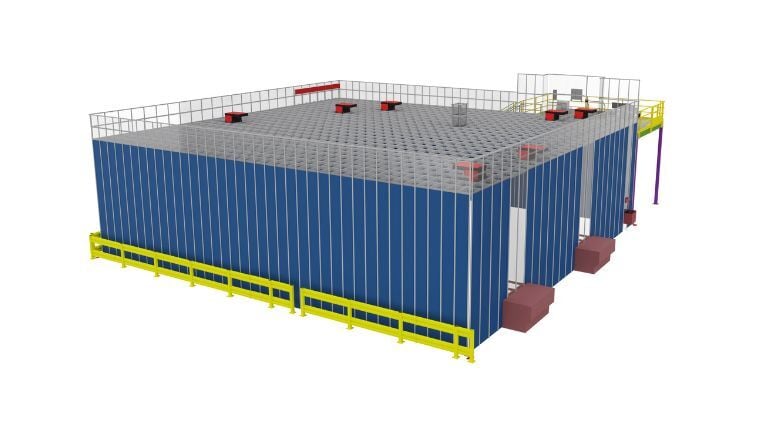
To address growing operational pressure, WEG partnered with Kardex to implement an AutoStore goods-to-person automation system inside its Duluth headquarters warehouse.
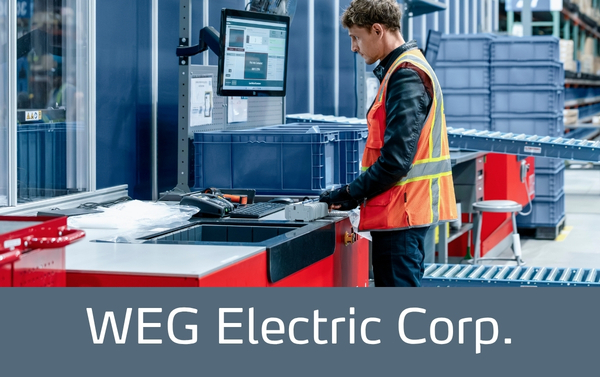
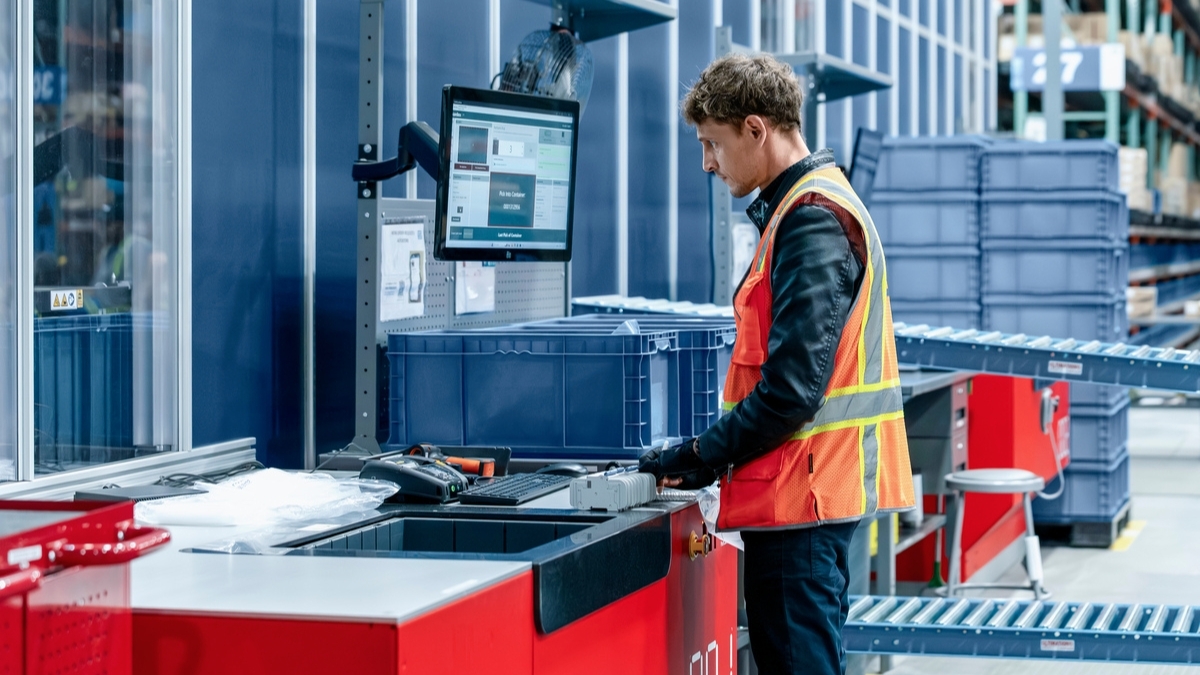
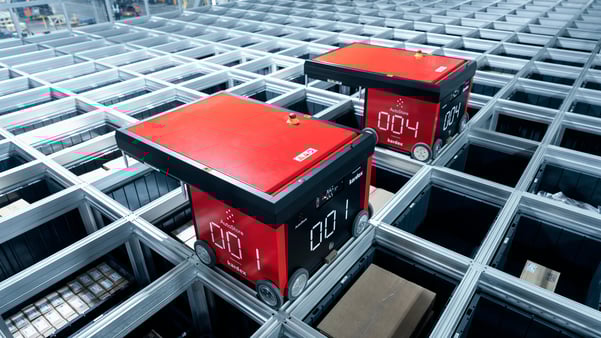
The system consolidates thousands of small-parts SKUs into a compact, high-density storage grid. Autonomous robots retrieve bins from the grid and deliver them directly to operators at ergonomic workstations, eliminating the need for employees to walk warehouse aisles searching for inventory.
This goods-to-person approach significantly reduces operator travel time while improving picking consistency and inventory visibility. At the core of the system is Kardex FulfillX warehouse execution software, which integrates the AutoStore solution with WEG’s existing ERP environment. FulfillX manages inventory storage, order sequencing, and system workflows in real time, helping ensure that inbound, storage, and outbound processes operate efficiently together.
By combining automation with integrated software control, WEG created a centralized platform for managing small-parts inventory and order fulfillment inside the existing facility.
Boosting warehouse performance
-
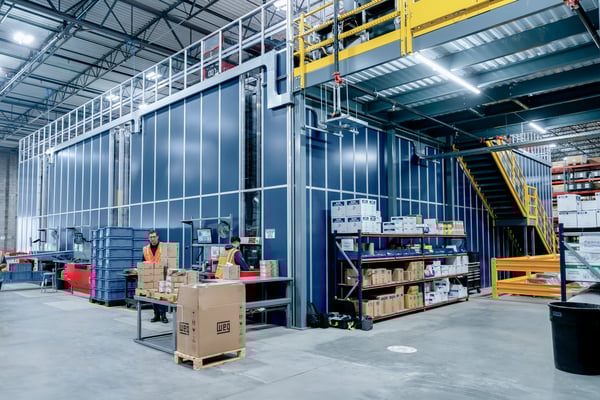
Following implementation, WEG began seeing measurable operational improvements across its warehouse operations. One of the most immediate benefits came from consolidating small-parts inventory into the automated system. By moving thousands of items into the AutoStore grid, the warehouse was able to reorganize existing storage areas and free up valuable floor space previously used for small-parts shelving.
-
This improved overall warehouse space utilization and allowed the operation to better support pallet storage and other inventory types. Automation also enabled the warehouse team to significantly increase picking efficiency. With goods delivered directly to operators, small-parts picking speeds improved significantly compared to the previous manual process.
-
At the same time, the system’s controlled storage environment and software-driven inventory tracking improved inventory accuracy and visibility across the operation. The improved workflow allowed WEG to redeploy several employees from manual picking tasks into other operational roles where they could contribute greater value to the organization.
-
Together, these improvements helped the Duluth warehouse support increasing order volumes while maintaining reliable service for customers across the United States.
Compact, scalable design
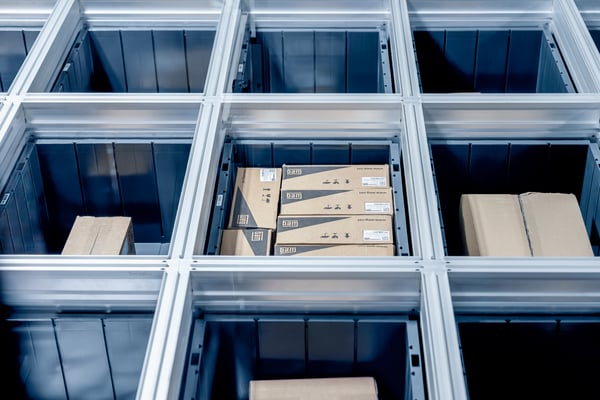
The AutoStore system provides the high-density storage foundation that allows WEG to support growing small-parts inventory within the existing headquarters facility.
By storing inventory vertically within the automated grid, the system significantly increases storage density compared with traditional shelving. This compact design allows thousands of SKUs to be stored within a much smaller footprint while ensuring rapid access to every item.
The modular architecture of the system also allows the operation to scale over time. Additional robots or workstations can be added as order volumes grow, enabling the system to adapt to changing operational demands. This flexibility allows WEG to expand warehouse capabilities without major structural changes to the facility, helping the Duluth headquarters continue supporting the company’s growth across North America.
Scope of delivery
| Component | Specification / Quality |
| AutoStore Grid | High-density grid supporting 13,938 storage bins |
| Robots | 7 AutoStore R5 Robots |
| Workstations | 3 Ports total - 2 CarouselPorts for picking, 1 ConveyorPort for inbound |
| Software | Kardex FulfillX WES for order orchestration and system control |
| Operator Interface | FulfillX operator interface for supporting picking, putaway, and cycle counting |
| Integration | Full ERP integration with SAP WM ECC |
| Commissioned | 2025 |
Supporting long-term growth
The implementation of AutoStore automation has helped WEG modernize warehouse operations while maintaining its existing headquarters footprint.
By combining high-density storage, goods-to-person workflows, and integrated software management, the Duluth warehouse now operates with improved efficiency, visibility, and scalability. The system supports growing inventory volumes while helping the operation maintain reliable fulfillment performance for customers across the United States.
The modular architecture of the system also allows the operation to scale over time. Additional robots or workstations can be added as order volumes grow, enabling the system to adapt to changing operational demands.
The results?
Faster picking performance
Improved small-parts picking speed through goods-to-person workflows
Improved inventory accuracy
Controlled storage and real-time visibility
Optimized warehouse space
Small-parts storage consolidated into a compact automated grid
Labor optimization
Warehouse employees redeployed to higher-value operational roles
Future scalability
Modular system design supports future expansion